 ×
×
As a professional designer, manufacturer, and builder of padel courts, Whale Sports is committed to providing clients with comprehensive solutions from planning to completion. The following are professional Q&As regarding padel court construction to help you gain a full understanding of the project.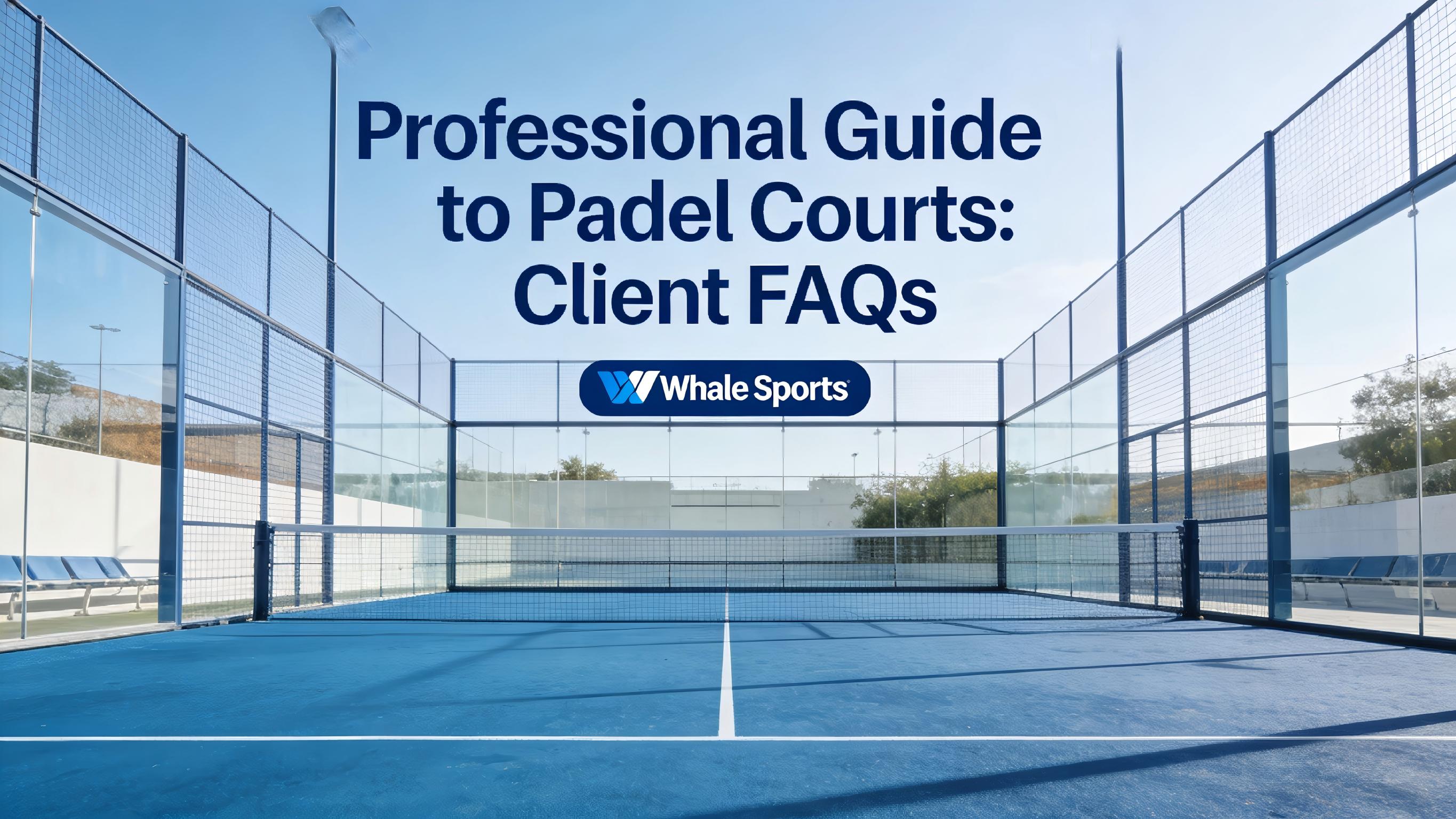
Part 1: Site Foundation and Planning
Q1: How much space is required to build a standard padel court?
A: The playing area of an internationally standard padel court measures 10 meters (width) × 20 meters (length). However, considering the safety buffer zones, perimeter fencing structure, and outer walkways, the minimum recommended total land area is:
Indoor court: Approximately 12 meters wide × 22 meters long (with a recommended clear height ≥ 8 meters).
Outdoor court: Approximately 14 meters wide × 24 meters long (must include surrounding drainage and equipment areas).
We can provide customized compact or optimized layout solutions based on your actual land dimensions.
Q2: What are the core construction differences between indoor and outdoor courts?
A: The main differences lie in the structural design to address environmental factors:
Outdoor Courts:
Foundation: Must prioritize the drainage system to prevent water accumulation. Typically, a concrete foundation is used with a pre-set drainage slope.
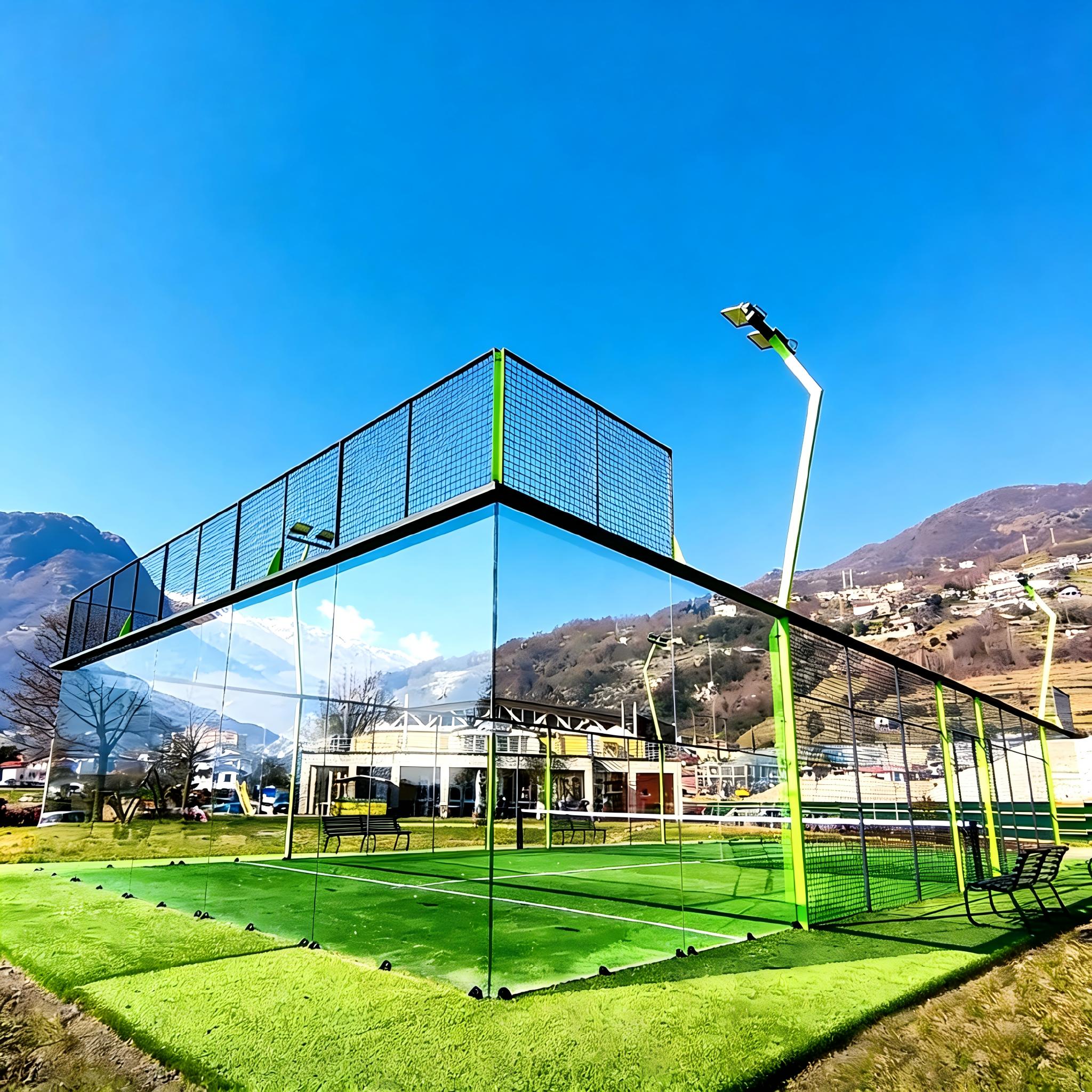
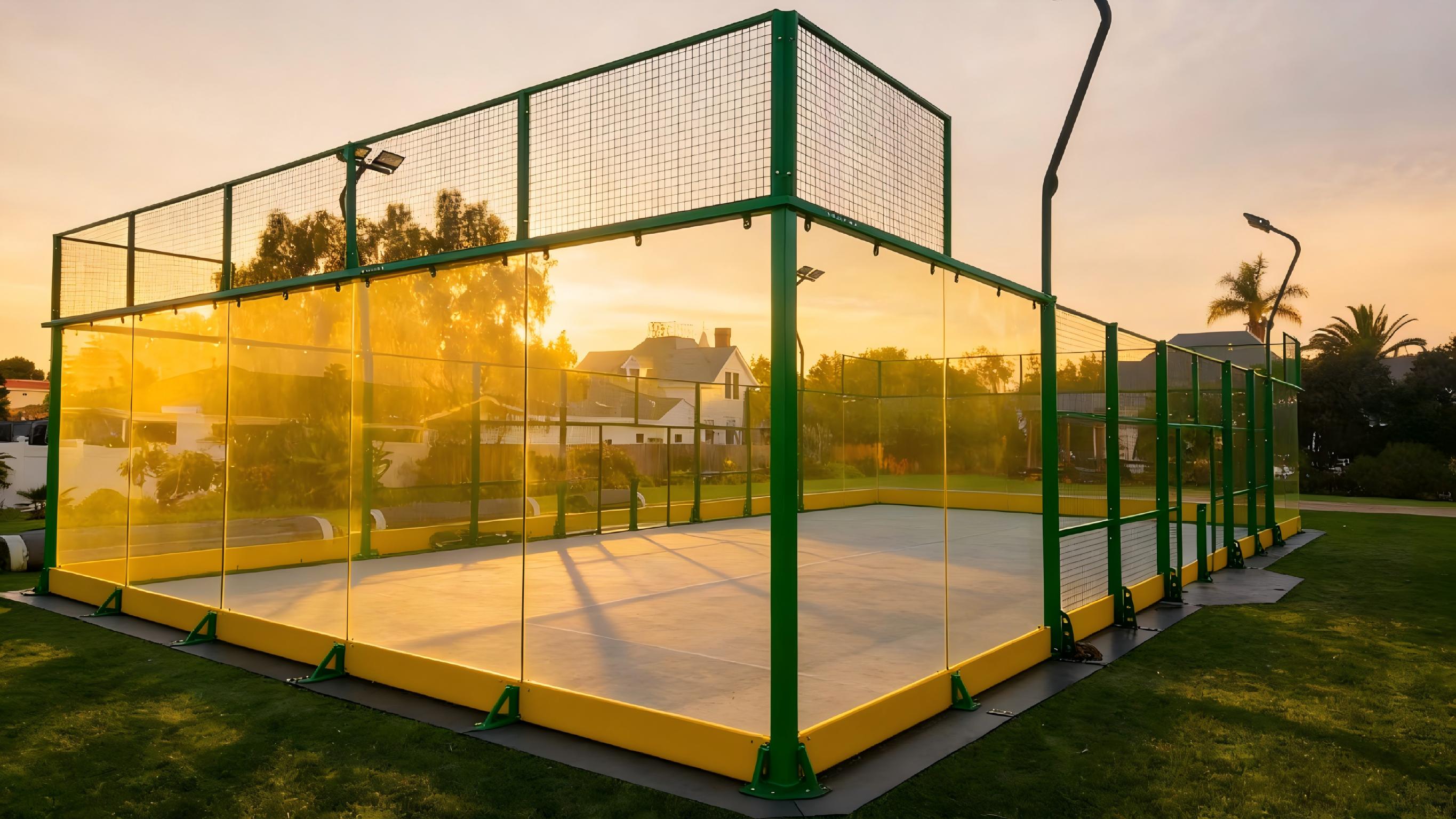
Fencing and Walls: Must use high-quality galvanized steel or powder-coated steel that is corrosion-resistant. Wall glass must be laminated safety glass, resistant to wind pressure and impact.
Lighting: Requires a specially designed outdoor lighting system that is glare-free and high-intensity, considering the impact of nighttime use on the surrounding area.
Indoor Courts:
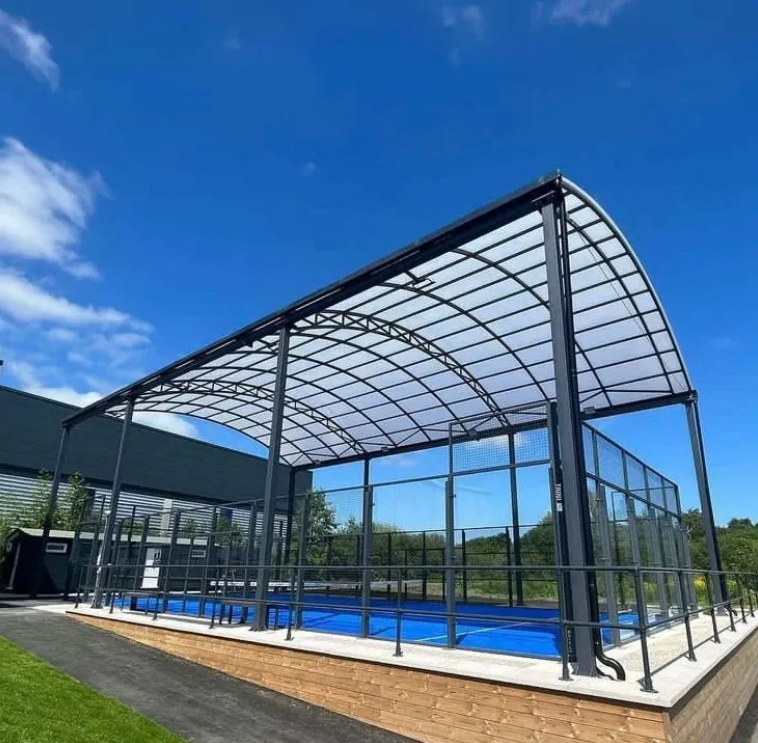
Structure and Ventilation: The building structure must meet span requirements, and an efficient air circulation and dehumidification system should be planned to ensure a comfortable environment and prevent slippery surfaces.
Lighting and Acoustics: Lighting must avoid glare, and additional acoustic treatment materials (such as sound-absorbing wall panels) may be necessary to reduce reverberation noise.
Part 2: Structure and Materials
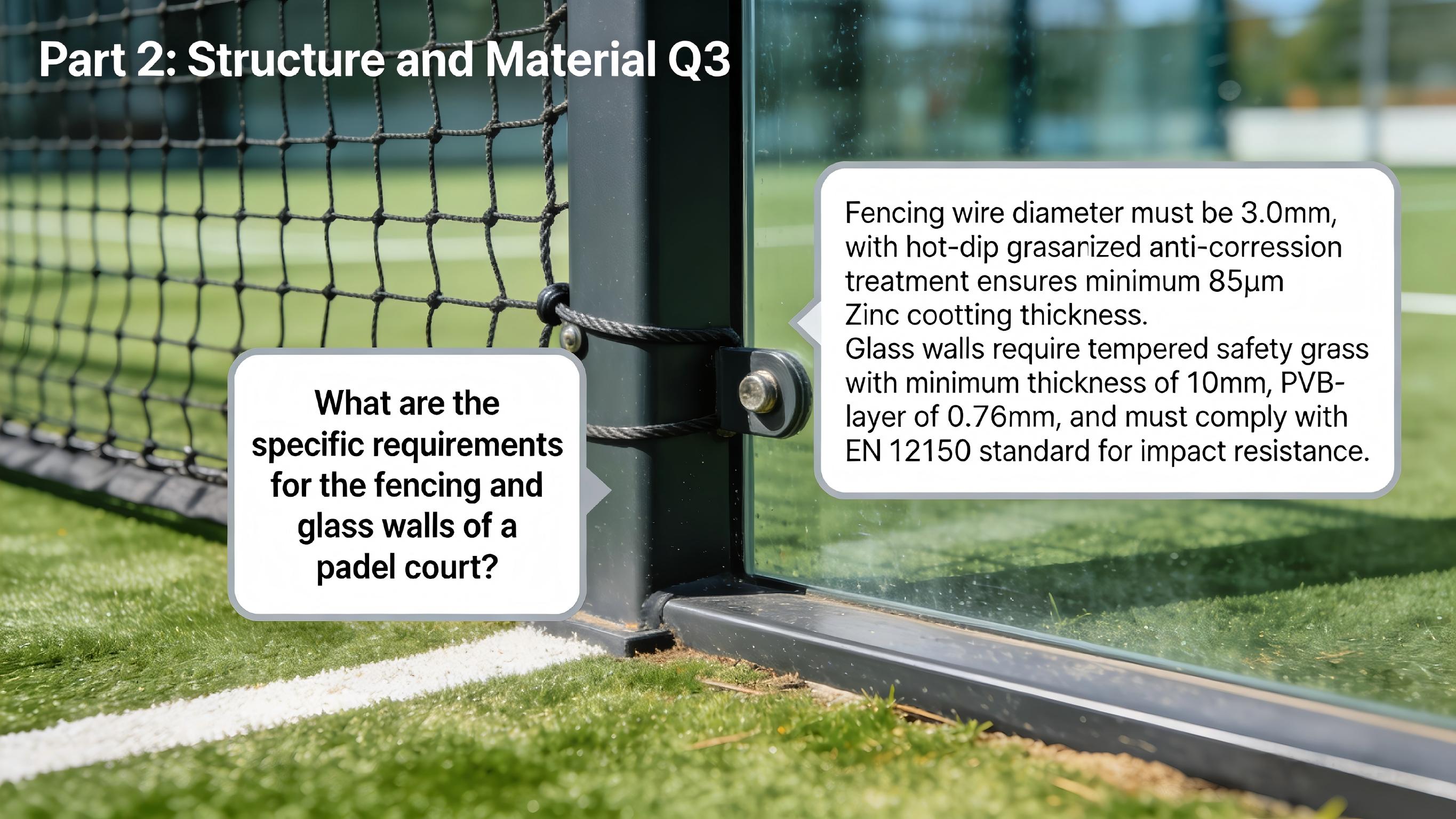
Q3: What are the specific requirements for the fencing and glass walls of a padel court?
A: These are the core elements for safety and performance, and we strictly adhere to the following standards:
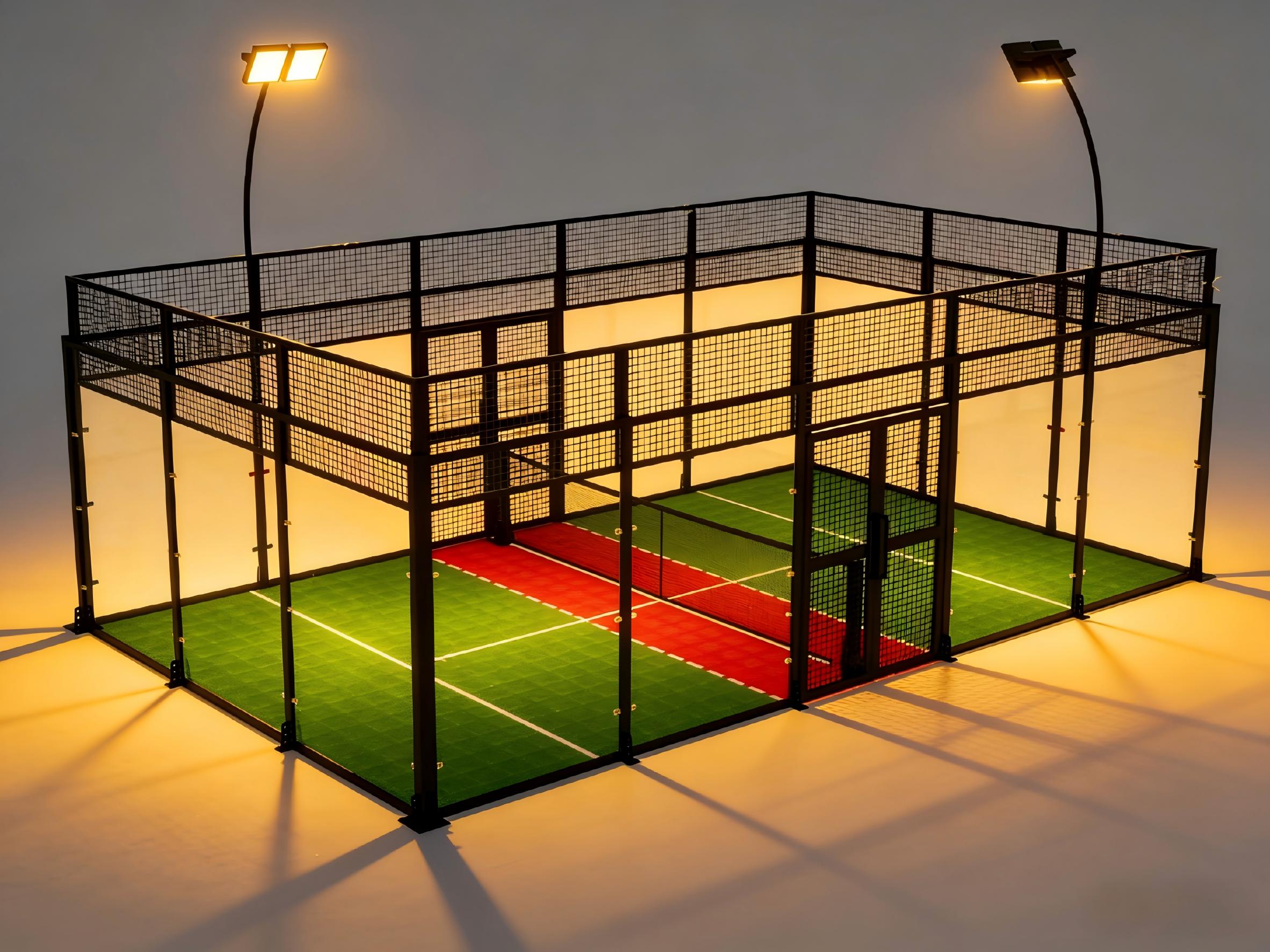
Fencing: Uses high-strength galvanized steel wire (recommended wire diameter ≥ 3.5mm), with mesh size designed to prevent the ball from passing through. All metal structures (posts, beams) undergo hot-dip galvanizing for anti-corrosion treatment, ensuring long-term rust-free use outdoors.
Glass Walls: Must use transparent laminated safety glass (typically 12mm). This ensures:
Safety: If broken, fragments adhere to the interlayer film and do not scatter.
Impact Resistance: Can withstand powerful ball strikes.
Clear, Undistorted Vision: Provides optimal viewing for players and spectators.
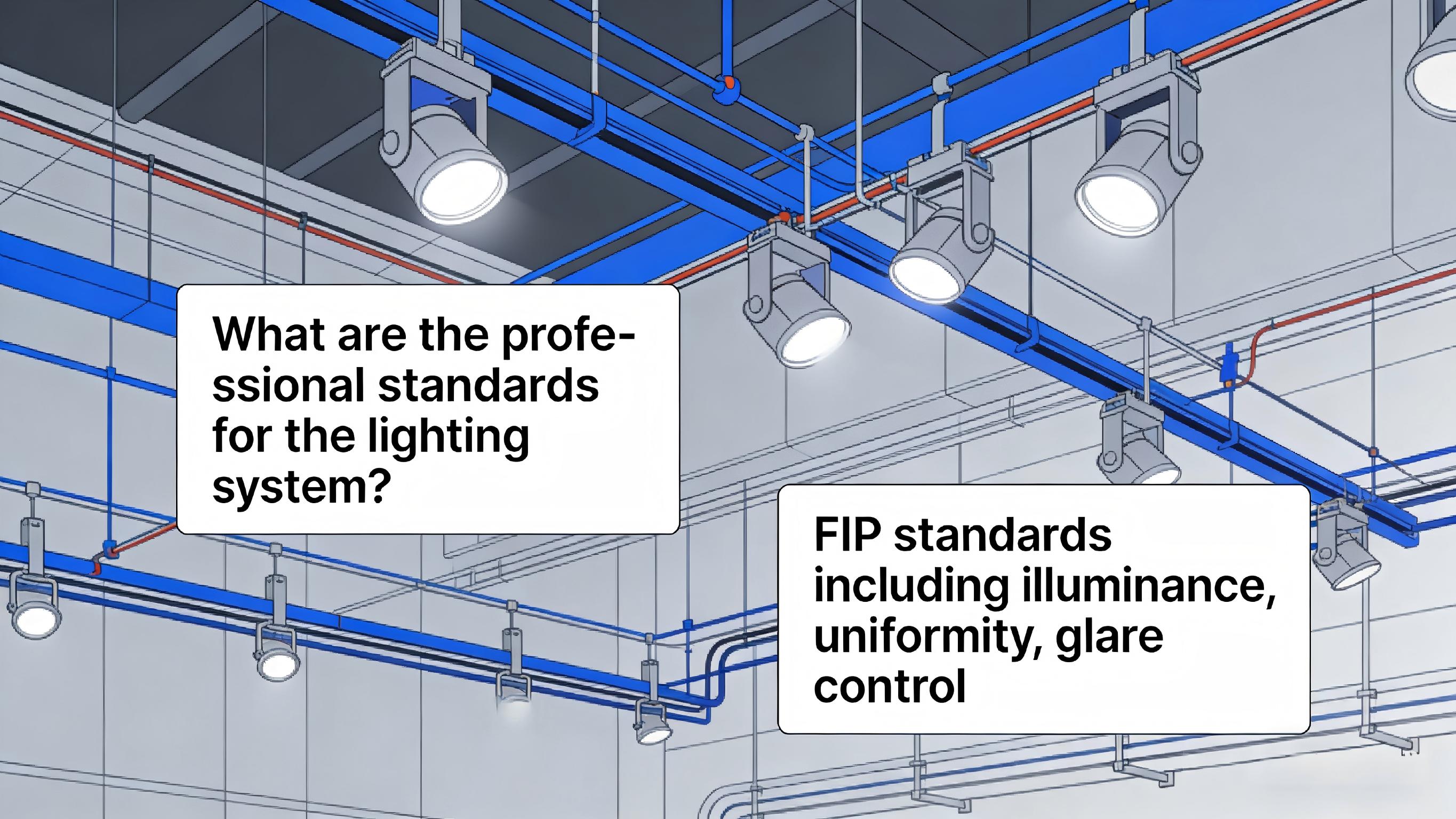
Q4: What are the professional standards for the lighting system?
A: Good lighting is crucial for ensuring match safety and experience. We follow the guidelines of the International Padel Federation (FIP):
Illuminance: Amateur/training courts should have no less than 200 lux; professional/competition courts are recommended to reach 400-500 lux.
Uniformity: Must avoid patches of light and shadow, ensuring even light distribution across the entire court.
Glare Control: Fixtures should be equipped with professional shades, and the installation angle should be scientifically designed to prevent direct light into players' eyes.
Energy Efficiency and Durability: We primarily promote LED professional sports lighting systems for their energy savings, long lifespan, and low lumen depreciation.
Part 3: Daily Maintenance
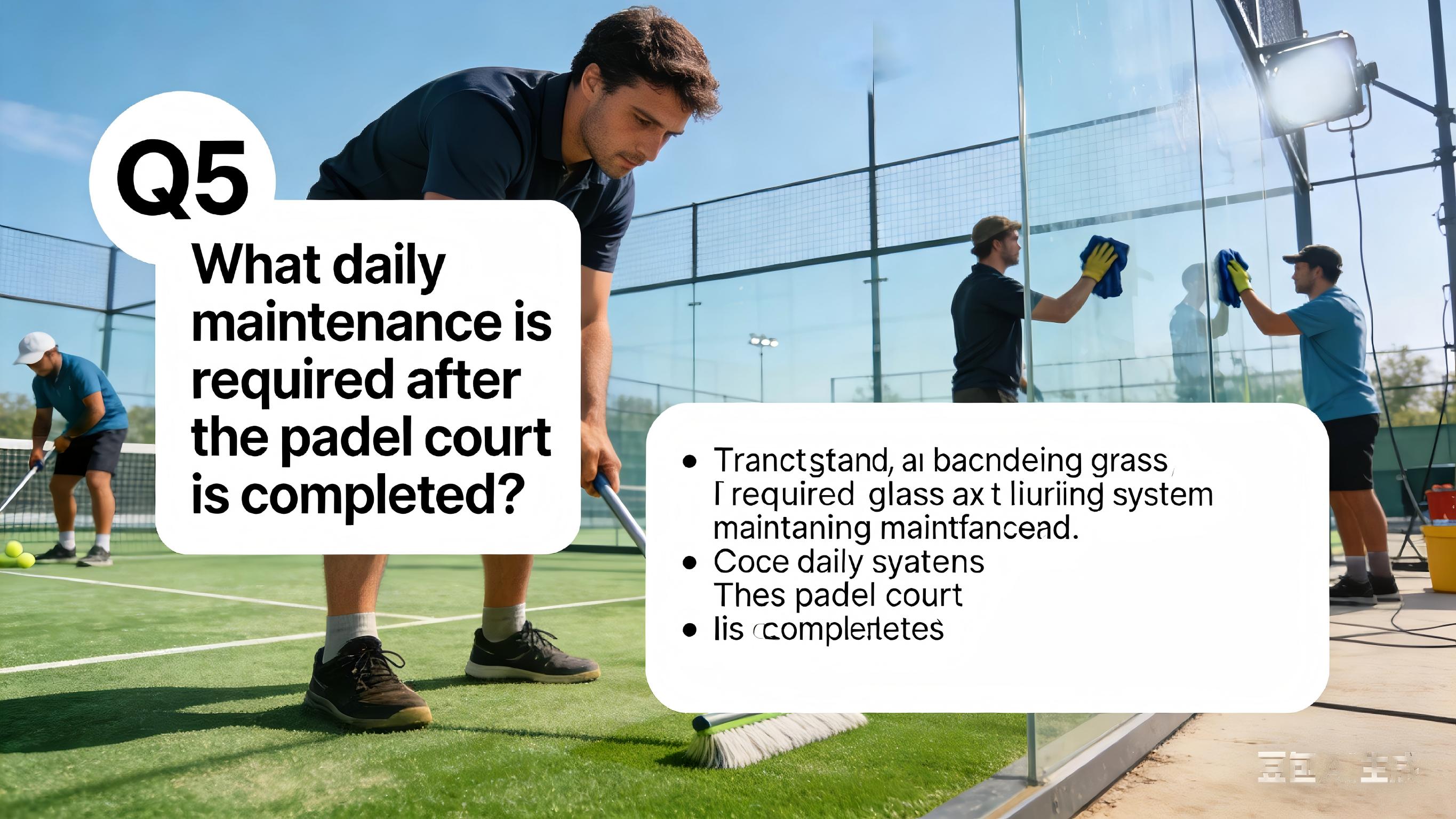
Q5: What daily maintenance is required after the padel court is completed?
All our frames are galvanized and require almost no maintenance. However, some dust removal is still necessary, such as:
Artificial Turf Field: Regularly groom the fibers to keep them upright, replenish infill sand, and sweep away leaves and debris.
Fencing and Glass: Regularly rinse with clean water and check the tightness of connectors.
Lighting: Regularly clean dust from the surface of the fixtures.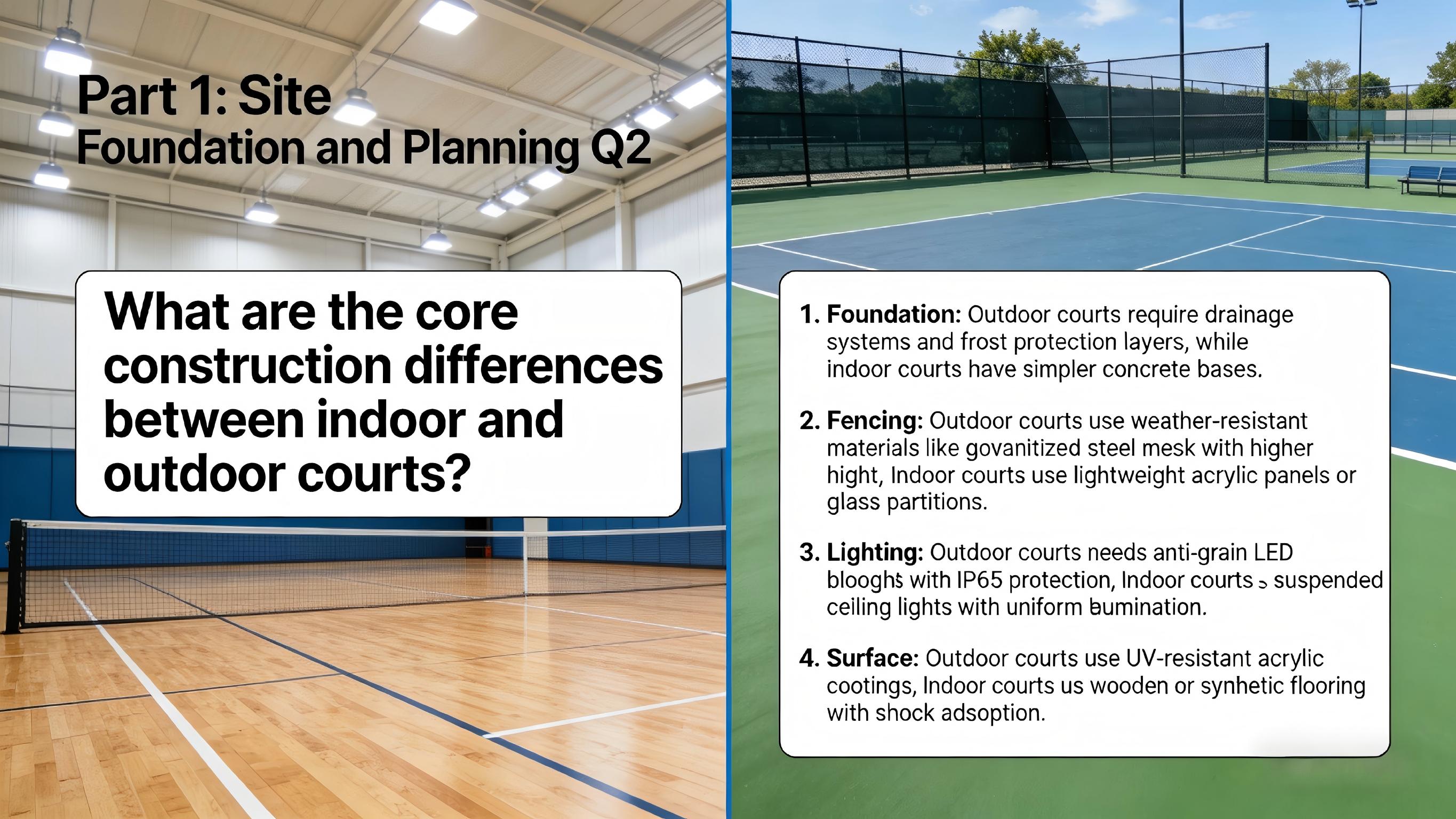
 Hot News
 EN
EN