
 EN
EN



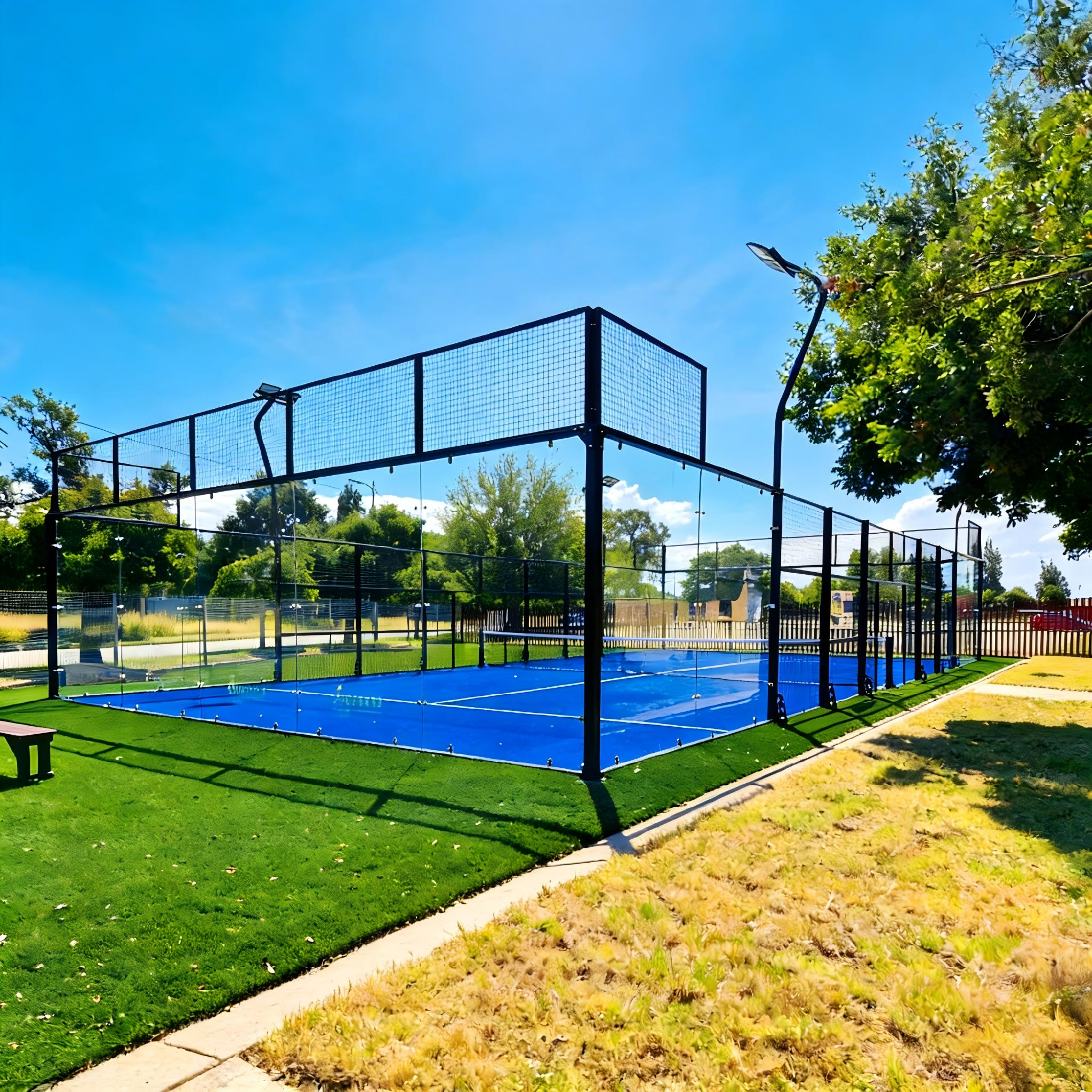
Spatial Compatibility: How One Tennis Court Fits Two Padel Courts
Converting a tennis court to padel facilities leverages significant dimensional overlap. A regulation doubles tennis court measures 23.77m × 10.97m (261m²), while a padel court requires 20m × 10m (200m²). This allows two padel courts—including necessary walkways and spectator zones—to fit comfortably within one tennis court footprint. The compact layout maximizes facility utilization, enabling operators to serve twice the player capacity during peak hours.
Dimensional Overlap and Layout Efficiency
Tennis courts provide ~40% more surface area than required for two full-size padel courts. Strategic orientation—typically aligning both padel courts lengthwise along the tennis court’s long axis—enables shared perimeter fencing, reducing material and installation costs. Operators consistently report 65% higher hourly booking revenue post-conversion, driven by dual-court operations and padel’s shorter average match duration (45–60 minutes versus 90+ minutes in tennis).
Structural Adaptability of Existing Tennis Court Infrastructure
Existing tennis court foundations typically require only surface-layer modifications—such as resurfacing with padel-specific acrylic or synthetic materials—for compliant padel installation. Perimeter fencing can be reinforced and repurposed as structural support for padel enclosures, while existing lighting systems are easily repositioned to meet padel’s lower mounting height requirements (typically 6–8m vs. tennis’ 10–12m). This reuse of core infrastructure slashes conversion costs by 30–50% compared to new builds, without compromising structural integrity or playability.
Cost and Regulatory Advantages of Tennis Court Conversion
Lower Capital Expenditure vs. Building from Scratch
Converting an existing tennis court into two padel courts delivers substantial cost savings over new construction. Groundwork, drainage, and foundation preparation—costly components of greenfield builds—can be avoided entirely. Leveraging the existing concrete slab, fencing, and lighting reduces initial investment to £20,000–£50,000 per padel court, versus £40,000–£70,000 per court for new tennis facilities. Maintenance savings follow: padel’s acrylic surfaces demand less frequent resurfacing and line repainting than traditional tennis court materials, cutting annual upkeep by £2,000–£5,000 per court. As a result, ROI typically occurs within 3–5 years—nearly half the timeframe of new-build projects.
| Cost Factor | New Construction | Conversion |
|---|---|---|
| Initial Investment | £40k–£70k | £20k–£50k |
| Annual Maintenance | £3k–£7k | £1k–£3k |
| ROI Timeframe | 5–10 years | 3–5 years |
Streamlined Planning Consent Under Class E(d)/F2(c) Permitted Development
In England, conversions from tennis to padel often qualify for permitted development rights under Class E(d) (indoor sport) or F2(c) (outdoor sport), provided the site already lawfully hosts sporting use. Since padel is classified as a variant of racket sport—and does not materially increase floor area, height, or external impact—councils routinely treat such projects as continuations of existing lawful use. Full planning applications are usually unnecessary if modifications remain within the original footprint and height envelope. Exceptions include floodlight upgrades, which may require a light impact assessment, or developments affecting green belt land or listed buildings. Where applicable, consent is typically secured 8–12 weeks faster than for new-build applications. Operators should still verify local policy on Section 106 obligations and Community Infrastructure Levy (CIL) applicability, as these vary by authority.
Enhanced Revenue and Utilization Through Padel Integration
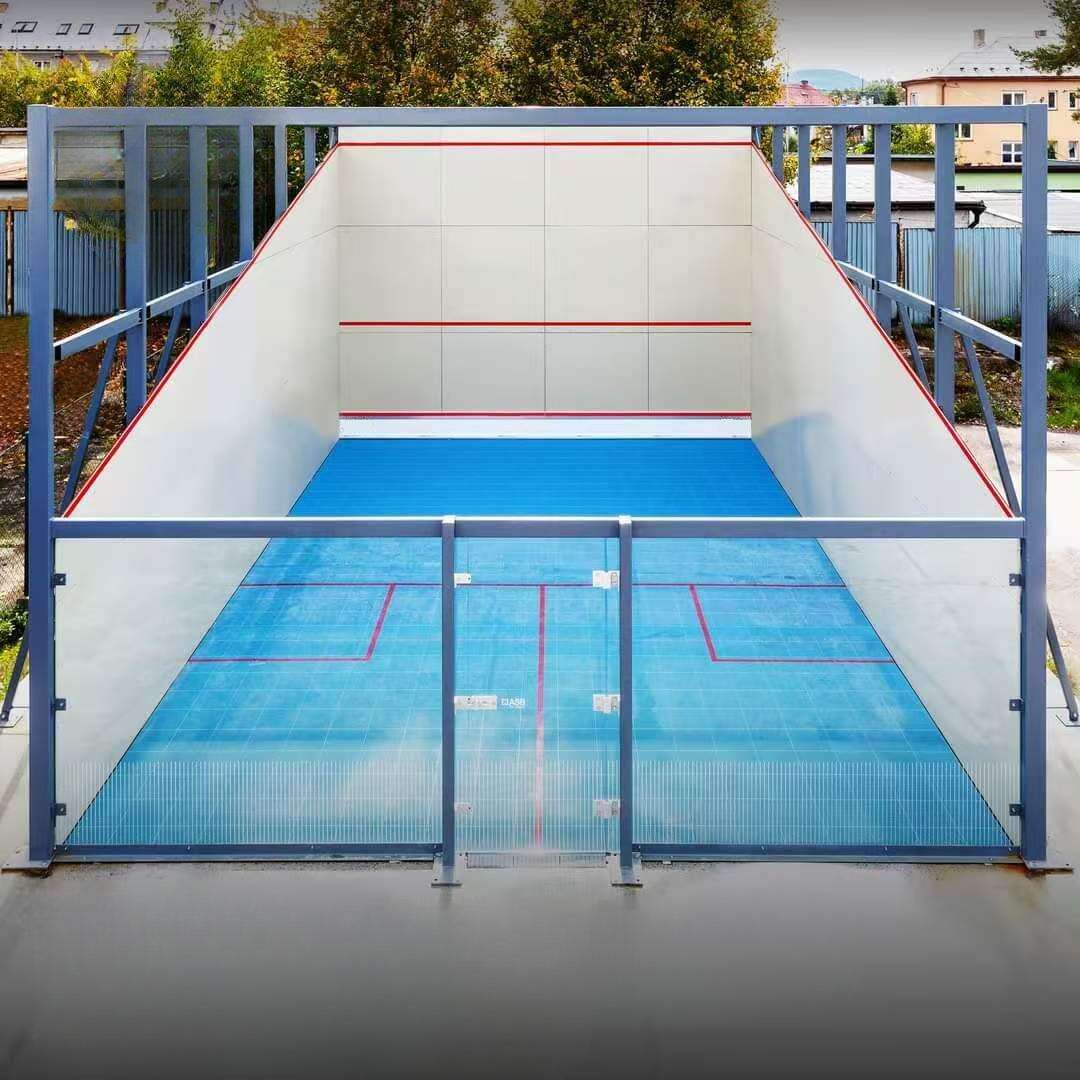
Converting one tennis court into two padel courts unlocks significantly higher revenue potential. Padel’s shorter match duration enables up to four booking slots per court per day—nearly double the throughput of tennis—while maintaining high-quality play. With the global padel market projected to exceed €1.2 billion by 2023 and over $500 million invested in infrastructure worldwide that same year, demand is accelerating across demographics. Clubs benefit not only from increased court bookings but also from ancillary streams: equipment sales (nearly 900,000 rackets sold globally in 2023) and social events attract younger, more casual players who value accessibility and community. Digital platforms like Playtomic, now connecting over 4 million players across 5,500 clubs, further reduce idle time through real-time scheduling and automated payments. By transforming underutilized tennis space into high-turnover padel courts, venues future-proof their assets—aligning with shifting participation trends while maximizing return on existing land and infrastructure.
FAQ
1. How many padel courts can fit into a single tennis court?
Two padel courts, including walkways and spectator zones, can fit into a single tennis court.
2. What are the primary cost advantages of converting a tennis court?
Conversion avoids groundwork, drainage, and new construction costs, cutting investments to £20,000–£50,000 per court, compared to £40,000–£70,000 for new builds.
3. Does converting a tennis court require planning permission?
Generally, no. In England, such conversions often qualify under permitted development rights if within the original footprint, though exceptions apply for floodlight upgrades or protected areas.
4. What is the average ROI timeframe for a converted tennis court?
ROI is typically achieved within 3–5 years, compared to 5–10 years for new padel court construction.
5. Are existing tennis court utilities like fencing and lighting reusable for padel?
Yes, most infrastructure, such as fencing and lighting, can be adapted, reducing overall conversion costs by 30%–50%.