
 EN
EN


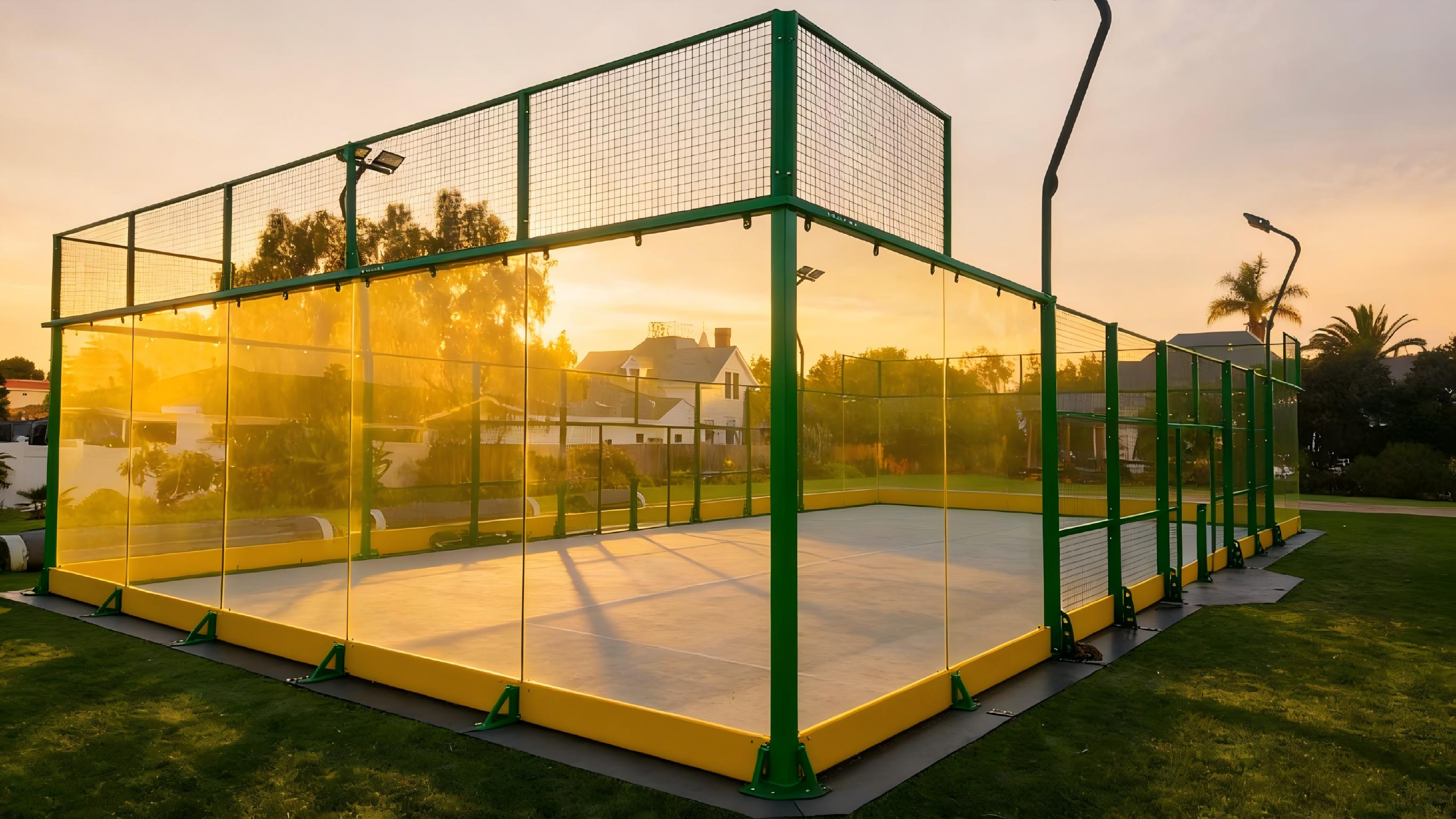
Sport-Specific Structural Requirements for a Padel Court Tent
Why Standard Event Tents Fail Under Padel’s Dynamic Loads and Clear-Height Needs
Padel requires a minimum covered clearance of 8 meters (26 feet) to ensure proper ball trajectory, consistent bounce, and unobstructed overhead play—far exceeding the typical 6-meter ceiling of standard event tents. This height deficit leads to frequent ball contact with the canopy, disrupting rallies and compromising gameplay integrity.
Beyond clear-height, padel courts impose unique dynamic loads: the cumulative weight of glass walls, metal framing, repeated ball impacts (up to 150+ per match), and lateral wind forces demand a tensioned structure engineered for gusts up to 120 km/h (75 mph). Standard tents lack reinforced trusses, high-capacity anchor systems, and load-distribution geometry needed to meet these performance thresholds safely.
They also omit sport-specific functional elements: non-slip surface integration, precision-engineered drainage channels, and UV-stabilized, abrasion-resistant fabrics that protect synthetic turf and maintain consistent traction and ball response. Without structural intent built specifically for padel’s biomechanical and environmental demands, generic event tents risk regulatory non-compliance, accelerated material fatigue, and diminished player safety and satisfaction.
Temporary vs. Semi-Permanent Deployment: Matching Tent Design to Event Frequency and Duration
Temporary padel court tents are optimized for rapid deployment and cost efficiency—ideal for one-off tournaments or short-term seasonal use. However, they typically rely on lightweight aluminum frames and simplified anchoring, limiting wind resistance to ~90 km/h and lacking corrosion protection for repeated outdoor exposure.
Semi-permanent solutions use hybrid aluminum–steel frames with factory-engineered footings, achieving certified wind resistance up to 120 km/h and compliance with snow-load standards such as ASCE 7-22. These structures integrate graded perimeter drainage, heat-sealed bathtub flooring, and modular anchoring compatible with concrete, asphalt, or compacted gravel sub-bases—reducing long-term maintenance while supporting multi-year operation.
For operators hosting three or more events annually—or committing to a fixed location—semi-permanent deployment delivers optimal balance: regulatory compliance, weather resilience, and operational flexibility without sacrificing structural longevity or court availability across variable climates.
Weather Resilience: Key Performance Criteria for Outdoor Padel Court Tents
Wind Load Ratings, UV-Stabilized Fabrics, and Engineered Rainwater Runoff
A padel court tent must withstand sudden, localized wind events far beyond those faced by general-purpose shelters. Wind load ratings—expressed in km/h or mph—reflect verified performance under standardized testing (EN 13782 and ASCE 7-22). For reliable outdoor operation, a minimum rating of 120 km/h (75 mph) is recommended, with certified anchoring included in the system design.
UV-stabilized fabrics prevent photodegradation, preserving tensile strength, colorfastness, and dimensional stability over time. High-performance PVC-coated polyester or PVDF membranes—certified to ISO 4892-3 for UV exposure—retain >85% of original tear strength after 5,000 hours of simulated sun exposure.
Engineered rainwater management begins with roof geometry: a minimum 15° pitch ensures self-cleaning runoff, while integrated gutters, downspouts, and perimeter drainage flaps direct water away from the playing surface. Combined with heat-sealed, bathtub-style flooring (hydrostatic head ≥1500 mm), this system eliminates pooling, prevents sub-base saturation, and maintains safe, playable conditions—even during prolonged rainfall.
Balancing Breathability and Waterproofing in Humid or High-Heat Climates
In tropical, subtropical, or arid regions, excessive heat retention and condensation can degrade turf, promote mold growth, and impair air quality. Fully sealed PVC canopies—while highly waterproof—require strategic ventilation to avoid thermal buildup. Roof-mounted ridge vents, operable side windows, and breathable HDPE mesh panels at eave level allow passive airflow while excluding rain.
The most effective solution combines a waterproof top layer (PVC with ≥3000 mm hydrostatic head) and a breathable underlayer (HDPE mesh with ≥20% open area), creating a dual-layer microclimate system. This configuration reduces internal humidity by up to 40%, extends fabric lifespan by limiting thermal stress, and eliminates the need for mechanical dehumidification—without compromising rain protection or UV shielding.
Frame and Fabric Materials: Durability, Compliance, and Performance Trade-Offs
Aluminum vs. Steel Hybrid Frames: Weight, Corrosion Resistance, and Structural Integrity
Frame selection hinges on deployment context and environmental exposure. Aluminum offers a 30–50% weight advantage over steel hybrids—streamlining transport and enabling setup by two people in under eight hours—making it ideal for temporary, mobile deployments. Its natural oxide layer provides inherent corrosion resistance, eliminating the need for additional coating in low-salinity environments.
Steel hybrids deliver superior rigidity and load-bearing capacity—critical for semi-permanent installations in coastal or high-wind zones—and better resist creep deformation under sustained tension. To ensure longevity, steel components must be hot-dip galvanized per ASTM A123 or powder-coated to EN 13438 standards.
Both materials must comply with internationally recognized benchmarks: EN 13782 for wind resistance, ISO 13943 for fire behavior classification, and ISO 9001 for manufacturing consistency. Hybrid designs—such as aluminum nodes with steel vertical supports—offer a pragmatic compromise, though they require precise torque calibration during assembly to maintain joint integrity.
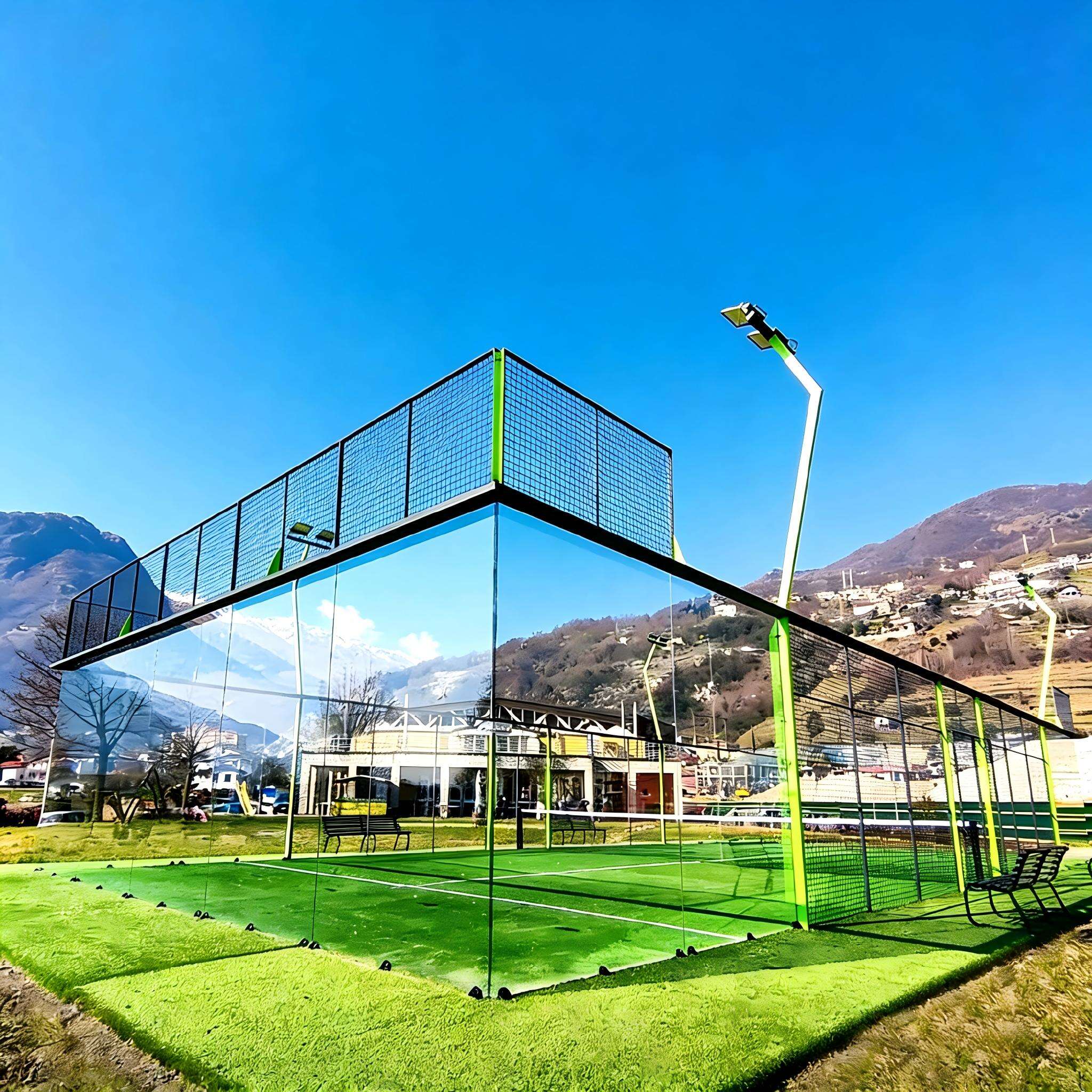
Tensioned PVC vs. HDPE Mesh Canopies: Light Transmission, Longevity, and Safety Standards
Canopy material directly shapes both performance and experience. Tensioned PVC membranes provide exceptional waterproofing (≥3000 mm hydrostatic head), block >99% of UV radiation, and offer 8–12 years of service life in temperate climates—but transmit only ~10% natural light, often necessitating supplemental LED lighting aligned with UNE-EN 12464-1 illumination standards.
HDPE mesh fabrics increase daylight transmission to 50–70%, cutting energy costs and enhancing spatial orientation for players. Their open-weave structure promotes airflow, reducing condensation and thermal buildup. However, they offer lower weather resistance (typically rated to 1500 mm), shorter service life (3–5 years), and reduced impact absorption—requiring careful placement in low-hail-risk zones.
All canopy materials must meet three non-negotiable safety criteria:
- Flame retardancy: EN 13501-1 B-s1/d0 (surface spread of flame and smoke development)
- Tensile strength: ≥2,500 N/5 cm in both warp and weft directions (ISO 1421)
- Chemical safety: REACH SVHC-free certification, verified via third-party lab testing
Leading manufacturers now deploy composite architectures—e.g., PVC-coated polyester laminated over HDPE mesh—to harmonize light diffusion, tear resistance, and runoff efficiency while meeting all core performance benchmarks.
Site Integration Essentials: Drainage, Sun Management, and Safety for Padel Court Tents
Graded Perimeter Drainage, Slope Compatibility, and Non-Slip Surface Coordination
Effective site integration begins with hydrological compatibility. Graded perimeter drainage—using perforated PVC pipes embedded in gravel-filled French drains—must channel runoff at least 1.5 meters beyond the tent footprint to prevent erosion and groundwater saturation. The underlying site slope must remain under 1% (1 cm per meter) to preserve ball roll consistency while ensuring gravity-fed drainage.
When erected over existing padel courts, the tent’s drainage system must align precisely with the court’s sub-base gradient and edge detailing. Misalignment causes water to pool at panel seams or under wall bases—accelerating turf degradation and increasing slip risk. Integrated drainage flaps, recessed gutter rails, and heat-sealed floor-to-wall transitions eliminate these failure points.
Non-slip coordination extends beyond flooring: textured PVC sidewalls, anti-slip tape on access ramps, and UV-stabilized turf infill (e.g., silica sand with polymer binders) collectively reduce fall incidence by up to 60% in wet conditions, per independent field studies conducted by the International Padel Federation (FIP) in 2023. This holistic approach ensures regulatory compliance, player safety, and long-term surface integrity—regardless of climate or usage intensity.
FAQ
What is the recommended height clearance for a padel court tent?
A minimum of 8 meters (26 feet) of clearance is required to ensure proper ball trajectory and playability.
What wind load rating is suitable for outdoor padel court tents?
A wind load rating of at least 120 km/h (75 mph) is recommended for reliable operation.
What materials are best for padel court tent frames?
Aluminum offers portability and lightweight construction, while hybrid aluminum–steel frames provide superior durability and compliance with stronger wind and snow load standards.
How can condensation and thermal buildup be reduced in humid climates?
Using a dual-layer canopy system with PVC for waterproofing and HDPE mesh for breathability can reduce internal humidity and thermal stress.
What drainage measures are necessary for padel court tents?
Graded perimeter drainage paired with integrated drainage flaps and recessed gutter rails is essential to manage water runoff effectively.
Table of Contents
- Sport-Specific Structural Requirements for a Padel Court Tent
- Weather Resilience: Key Performance Criteria for Outdoor Padel Court Tents
- Frame and Fabric Materials: Durability, Compliance, and Performance Trade-Offs
- Site Integration Essentials: Drainage, Sun Management, and Safety for Padel Court Tents
- FAQ