
 EN



Padel Tennis Market Growth: Size, CAGR, and Long-Term Outlook
Global Market Size and Forecast (2024–2032): $1.2B Base, 14.3% CAGR
The global padel tennis market reached an estimated $1.2 billion in 2024, driven by rapid court construction and rising player registrations. Industry analyses project a 14.3% compound annual growth rate (CAGR) through 2032—pushing the market toward $3.4 billion. This pace outpaces most other racket sports and reflects padel’s evolution from regional pastime to mainstream commercial asset. Over 40% of new infrastructure projects are indoor facilities, enabling year-round play in urban centers. Equipment sales—rackets, balls, and specialized footwear—mirror this expansion as both recreational players and clubs refresh their gear. Real-estate developers, hospitality groups, and sporting-goods manufacturers are increasingly allocating capital to padel, drawn by its accessibility: novices routinely rally after their first lesson, reinforcing demand durability and long-term scalability.
Post-Pandemic Acceleration: Leisure Demand and Urban Recreation Shifts
The pandemic reshaped leisure habits—and padel emerged as a beneficiary. Health-conscious consumers sought socially engaging, outdoor-friendly exercise, and padel’s compact footprint (roughly one-third the size of a tennis court) made it ideal for dense urban environments where space is scarce and costly. Real-estate and hospitality developers responded by embedding padel courts into mixed-use developments, transforming them into neighborhood activity hubs. Its doubles-only format fosters immediate social connection among families, colleagues, and young professionals. Indoor construction has surged post-pandemic, eliminating weather-related downtime; in many emerging markets, public padel courts per capita remain less than half that of tennis—highlighting substantial untapped potential as municipalities and private investors scale infrastructure to meet accelerating demand.
Why Padel Tennis Appeals to Mass Audiences: Accessibility and Social Dynamics
Padel’s rapid global ascent stems from a rare convergence of low physical barriers and a uniquely social format that engages players across generations and skill levels.
Lower Physical Barriers and Shorter Learning Curve vs. Tennis and Squash
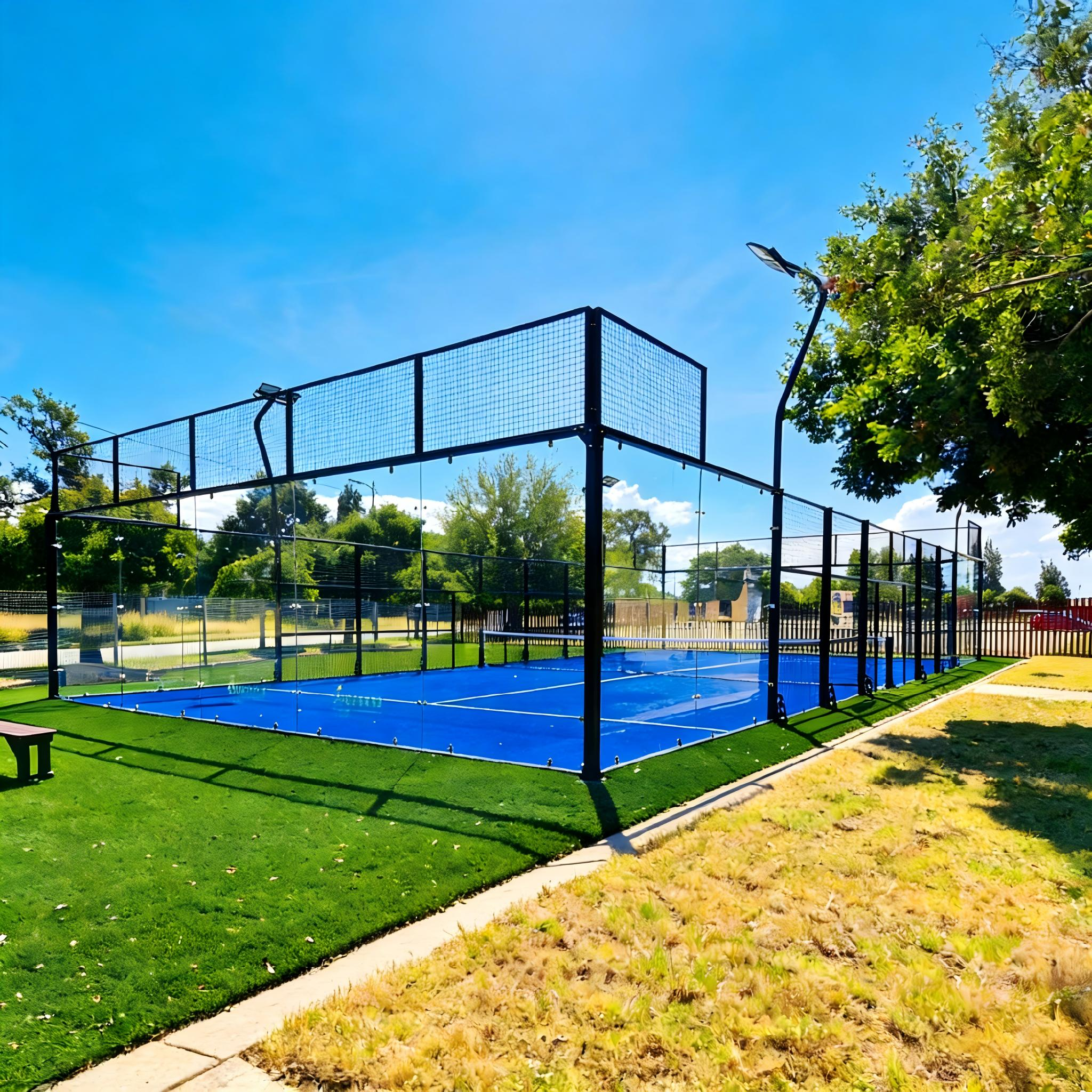
The smaller court, underhand serve, and wall-assisted play generate longer rallies with less sprinting than tennis—reducing the technical threshold for newcomers. Beginners experience immediate success, unlike tennis where mastering a consistent serve often takes months. The International Padel Federation reports first-session retention rates above 65%, while club data show female participation at 40%—nearly double the average for traditional racquet sports. Facility operators benefit directly: a single panoramic padel court supports mixed-skill play throughout the day without scheduling conflict. With a footprint of just 200 m²—versus tennis’s 260 m²—three padel courts fit in the space of one tennis court, maximizing revenue per square meter. For seniors and juniors, the enclosed layout and slower ball pace lower injury risk and intimidation, driving adoption in community recreation programs.
Inherently Social Format: Doubles-Only Play and Compact Court Design Drive Engagement
Padel is exclusively doubles—a structure that demands constant communication, teamwork, and camaraderie, even among strangers. Transparent tempered-glass walls turn each match into a spectator-friendly social event, removing the isolation common in squash or tennis. The compact court keeps players physically close, encouraging quick verbal exchanges and shared celebrations after every point. This natural interaction transforms a session into entertainment—not just exercise. Urban clubs leverage this by integrating leagues, casual matches, and post-game lounges in one venue, achieving significantly higher repeat visit rates than standalone fitness offerings. As a result, padel satisfies dual consumer priorities: physical wellness and community connection—aligning precisely with the growing preference for sports that function as social experiences.
Regional Expansion Patterns: Europe’s Maturity vs. APAC’s Strategic Rollout
Europe Leads with >75% of Global Courts; UK, Sweden, and Germany Show Strongest Adoption
Europe hosts over 75% of the world’s padel courts, according to 2024 estimates. Spain remains the epicenter with ~20,000 facilities, but growth momentum has shifted northward into underserved markets. The UK exemplifies rapid catch-up: court numbers surged from fewer than 50 in 2018 to over 500 by early 2024—fueled by private club investment and municipal conversions of underused tennis courts. Sweden’s indoor padel cluster now exceeds 4,000 courts, supported by a scalable franchise model that lowers operator entry costs. Germany adds double-digit net courts annually, with Berlin and Munich leading in purpose-built domes for year-round play. This mature-market expansion leverages high disposable income, existing racket-sport culture, and low-cost retrofitting of sports halls—creating a replicable blueprint now being adopted across smaller European nations.
APAC Growth Leverages Hospitality and Real Estate Integration — India, Indonesia, and UAE Prioritize Venue Clusters
Asia-Pacific markets bypass standalone club models by embedding padel into hospitality and mixed-use real estate developments. India’s first dedicated padel clusters launched in Mumbai and Delhi within luxury hotels and high-end residential complexes—using the sport to differentiate premium amenities. Indonesia follows suit: resort developers in Bali and Jakarta integrate compact courts to attract younger, experience-driven travelers. The UAE pursues a destination-cluster strategy, with Dubai adding 15 padel facilities in 2023 alone—often co-located with high-traffic retail and dining zones. This approach solves land-scarcity constraints while securing footfall from captive audiences, elevating padel from a niche sport to a lifestyle anchor. Early evidence suggests venue-cluster economics yield faster breakeven than standalone European clubs—drawing real estate funds and hospitality groups to scale regional networks.
Commercial Viability of Padel Tennis: Venues, Media, and Sponsorship Models
Hybrid Club Model: Combining Fitness, F&B, and Streaming-Ready Padel Tennis Facilities
The most commercially resilient padel venues have evolved beyond simple court rentals into hybrid social-commercial ecosystems—blending fitness, food & beverage, and broadcast-ready infrastructure. Integrating cafés and lounges capitalizes on padel’s social rhythm: players frequently gather before and after matches, boosting on-site spending. Meanwhile, streaming-ready panoramic courts attract tournament organizers and sponsors, positioning venues as media-friendly hubs. Ancillary revenue streams—including coaching, equipment retail, and fitness programming—further diversify income. Premium memberships and corporate event bookings provide stable cash flow, reducing reliance on volatile hourly court fees. In today’s market, facilities that operate as lifestyle destinations—not just sports halls—consistently outperform traditional models in profitability, member retention, and long-term resilience.
FAQ
What contributes to the growth of the global padel tennis market?
The market growth is attributed to rapid court construction, rising player registrations, increased investment from real estate and hospitality groups, and padel’s accessible format, which appeals to players of all skill levels.
Why is padel gaining popularity post-pandemic?
Post-pandemic, consumers sought socially engaging, outdoor-friendly recreational activities. Padel’s compact size and doubles-only format make it ideal for urban settings and foster community connections, accelerating its adoption post-pandemic.
How does the hybrid club model create additional revenue?
The hybrid club model integrates food & beverage services, fitness programming, and streaming-ready courts. These features boost ancillary revenues, attract sponsors, and enhance player experience, leading to higher profitability and retention rates.
Which regions are leading padel adoption?
While Europe leads globally with over 75% of courts, markets in Asia-Pacific, such as India, Indonesia, and the UAE, are rapidly adopting padel through integration with hospitality and real estate developments.
What makes padel more accessible compared to other racket sports?
Padel has lower physical barriers due to its smaller court size, easier underhand serve, and wall-assisted play, allowing for immediate success and longer rallies, even for beginners, seniors, and juniors.