
 EN



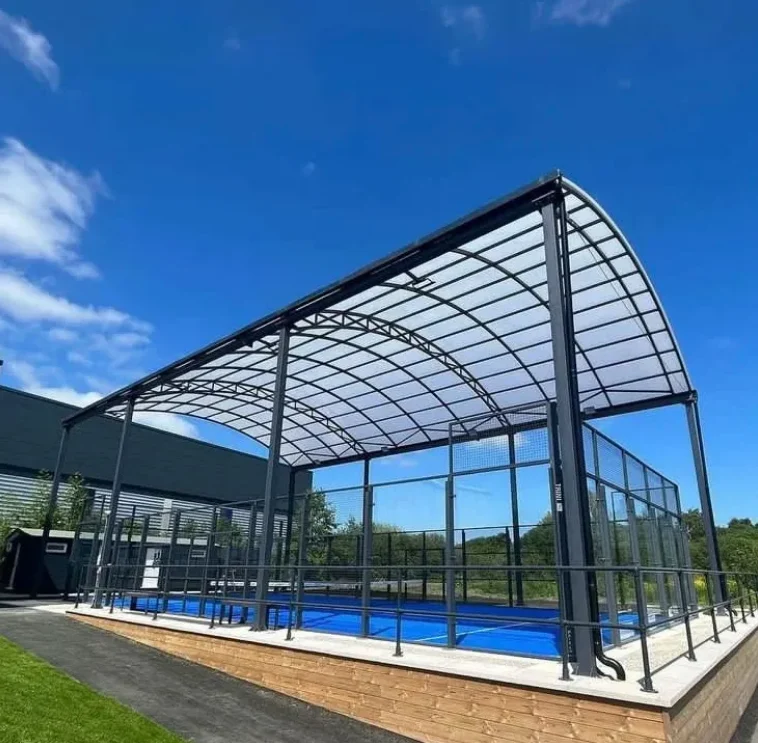
Structural Resilience: Wind, Snow, and Rain Load Performance
Wind resistance standards (ASCE 7-22, EN 1991-1-4) and anchoring best practices for high-wind zones
The American Society of Civil Engineers’ ASCE 7-22 standard maps design wind speeds based on risk category and geographic location—structures in hurricane-prone zones may need to withstand 3-second gusts of 67 m/s (150 mph) for Risk Category II. EN 1991-1-4 (Eurocode 1: Wind actions) provides a parallel framework, requiring calculation of peak velocity pressure and external pressure coefficients for open-span envelopes. Fabric tension and aerodynamic profiling are equally critical: reducing panel flutter can lower peak stress by up to 18%, according to a 2022 structural analysis.
In high-wind zones, anchoring systems must reliably transfer large uplift and sliding loads to the ground. Helical piles—with pull-out capacities exceeding 45 kN per anchor—are preferred for speed and minimal site disturbance, while concrete deadmen remain viable where soil conditions permit. A 2023 field test confirmed that properly tensioned ground anchors enabled a tent structure to survive gusts 40% above its design limit without failure. Best practice includes site-specific wind-tunnel or CFD modeling, periodic re-tensioning after major storms, and reinforced corner bracing to resist torsional forces.
Snow-load capacity and rainwater runoff design per EN 1991-1-3 — what ‘all-weather’ really means for Padel Court Tents
EN 1991-1-3 (Eurocode 1: Snow loads) maps characteristic ground snow loads, converted to roof loads using shape coefficients. Gabled or arched roofs create uneven snow distribution, demanding careful drift assessment—particularly on sheltered sites, where Annex B provisions can increase design values by up to 50%.
| Design Snow Load (EN 1991-1-3) | Ground Snow Zone Example | Typical Tent Capacity | All‑Weather Classification |
|---|---|---|---|
| ≤0.4 kN/m² | Low (coastal, mild) | Light‑duty | Limited winter use |
| 0.5–1.0 kN/m² | Moderate (inland plains) | Standard‑duty | Year‑round in most climates |
| ≥1.5 kN/m² | Heavy (alpine, high‑altitude) | Heavy‑duty | True all‑weather, including heavy snow |
“All-weather” for a Padel Court Tent means more than surviving light snowfall. It requires a frame rated for sustained snow accumulation, a UV-stabilized membrane that retains flexibility in sub-zero temperatures, and a drainage system sized for a 100-year storm event—supported by a minimum 2% roof slope and continuous gutters. A 2024 case study of a high-altitude facility demonstrated uninterrupted operation throughout a record-breaking winter using a tent rated for 2.0 kN/m² snow load, equipped with heated gutters and self-draining panels. This integration of snow load resilience, thermal stability, and robust runoff management defines true all-weather performance.
Regulatory Compliance and Court-Specific Sizing Requirements
To ensure playability and safety, any Padel Court Tent must strictly adhere to the dimensions outlined by the International Padel Federation (FIP). The official playing court measures 20 meters in length and 10 meters in width, but the tent’s structural footprint requires an additional safety buffer of at least 3 meters on each side—resulting in a minimum enclosed area of 26m × 16m. This buffer, mandated by the FIP’s 2023 court construction guidelines, accommodates player movement beyond the lines and integrates structural elements like wall frames without encroaching on the game space.
Beyond FIP requirements, local zoning regulations often impose further constraints. Municipalities may classify the tent as temporary or permanent, triggering rules on setbacks, maximum building height, and ground coverage ratios. In many jurisdictions, the tent’s apex—typically 6 to 8 meters—must comply with height limits, and permits for foundations or drainage may be required. Addressing these local codes early prevents costly retrofits and ensures smooth final inspections.
Foundation Options and Long-Term Ground Preparation
Gravel base vs. concrete slab: compaction specs, drainage, and lifecycle cost comparison for Padel Court Tents
Selecting the appropriate foundation directly impacts long-term stability, maintenance, and cost. Below is a concise comparison of gravel base and concrete slab options:
| Factor | Gravel Base | Concrete Slab |
|---|---|---|
| Compaction Specs | Requires 95% Proctor density using angular crushed stone; 4–6 inch lift thicknesses compacted with vibratory roller. | No compaction needed; slab must meet 3,000 psi compressive strength and 4-inch thickness for uniform load distribution. |
| Drainage | Excellent natural drainage—water percolates through voids, minimizing hydrostatic pressure and frost heave risk. | Requires integrated drainage (≥1% slope + perimeter drains) to prevent ponding and sub-base saturation. |
| Lifecycle Cost | Lower initial cost (30–50% less than concrete), but periodic top-up every 3–5 years; total 20-year cost moderate. | Higher upfront investment, but minimal maintenance—potential crack sealing every 10 years; total 20-year cost higher yet predictable. |
Gravel bases suit well-drained sites and moderate budgets, while concrete slabs deliver superior permanence and reduced long-term upkeep—ideal for permanent installations. Always consult a geotechnical engineer to verify soil bearing capacity before construction.
Climate-Adaptive Materials and Sustainable Design Features
UV-stabilized PVC and ETFE membranes, thermal break frames, and passive ventilation for energy-efficient Padel Court Tents
Envelope material selection governs thermal performance, daylight quality, and service life. UV-stabilized PVC membranes offer proven tensile strength, straightforward repair, and a typical lifespan of 15–20 years with proper maintenance. For projects prioritizing daylight transmission and weight reduction, ETFE foil cushions provide a lightweight alternative—reducing supporting steel mass by up to 60% compared to glazed systems—and demonstrate exceptional durability, often exceeding 30 years with minimal optical degradation.
Thermal bridging at the frame-to-membrane interface is a key source of energy loss. Thermal break frames—incorporating low-conductivity barriers between interior and exterior metal components—cut frame-related heat transfer by approximately half, stabilizing internal microclimate and curbing condensation. A 2023 case study documented a marked reduction in indoor condensation events after retrofitting standard tension structures with thermally broken aluminum profiles.
Passive ventilation is engineered into the apex to manage buoyant warm air. High-level ridge vents or mesh-integrated perimeter kickers leverage the stack effect—drawing fresh air upward and exhausting humid, stale air. This natural airflow strategy significantly reduces mechanical cooling demand during summer, transforming the Padel Court Tent into a high-performance, energy-efficient asset without reliance on power-intensive HVAC systems.
FAQ
What are the wind resistance standards for Padel Court Tents?
The wind resistance standards for Padel Court Tents include ASCE 7-22, which maps wind speeds based on risk category and location, and EN 1991-1-4, which calculates peak velocity pressure and external pressure coefficients. Reliable anchoring systems, proper tensioning, and reinforced bracing are also essential.
How are snow loads calculated for all-weather Padel Court Tents?
Snow loads are calculated using EN 1991-1-3, converting ground snow loads to roof loads with shape coefficients. Additional drift assessment on gabled or arched roofs ensures resilience against uneven snow distribution, with some designs rated for up to 2.0 kN/m² snow load.
What are the compliance requirements for court sizing?
The International Padel Federation requires a minimum enclosed tent area of 26m × 16m to ensure player safety and playability. Local zoning regulations may also impose height limits, setbacks, and ground coverage constraints.
Which foundation option is better for long-term use?
Concrete slabs provide better long-term stability and minimal maintenance costs, while gravel bases are more cost-effective upfront. Site-specific factors like soil conditions and drainage requirements affect the choice of foundation type.
What materials are commonly used for Padel Court Tent construction?
UV-stabilized PVC membranes are durable and cost-effective, while ETFE foil cushions offer lightweight designs and efficient daylight transmission. Thermal break frames and passive ventilation improve energy efficiency.
Table of Contents
- Structural Resilience: Wind, Snow, and Rain Load Performance
- Regulatory Compliance and Court-Specific Sizing Requirements
- Foundation Options and Long-Term Ground Preparation
- Climate-Adaptive Materials and Sustainable Design Features
-
FAQ
- What are the wind resistance standards for Padel Court Tents?
- How are snow loads calculated for all-weather Padel Court Tents?
- What are the compliance requirements for court sizing?
- Which foundation option is better for long-term use?
- What materials are commonly used for Padel Court Tent construction?