
 EN


Optimized Playability: How Premium Padel Court Surfaces Enhance Performance
Traction, Ball Bounce Consistency, and Player Responsiveness on High-Grade Turf and Acrylic Padel Court Surfaces
A padel court’s playing surface directly governs rally speed, movement safety, and technical execution. High-grade synthetic turf—featuring an 8–12 mm pile height and silica sand infill—delivers ball bounce consistency within ±2% of FIP specifications, ensuring competitive fairness and predictability. Its texturized monofilament structure provides a coefficient of friction between 0.6 and 0.8, enabling controlled lateral slides during sharp stops while preventing dangerous slips. For faster-paced play, acrylic coatings over a solid base offer immediate rebound and high abrasion resistance—but generate greater joint impact forces than compliant turf systems. Biomechanical research (2022) shows premium turf reduces peak ankle torque by up to 18% compared to rigid concrete, lowering inversion injury risk. This balance of grip and energy absorption also delays muscular fatigue; players report quicker recovery after long matches when surfaces support natural deceleration rather than abrupt halts. By selecting a surface engineered for both traction and responsive feedback, operators foster player confidence, technical precision, and measurable performance gains across all skill levels.
Heat Management Innovation: EnviroFill-Infilled Turf Reduces Surface Temperature by 32% While Maintaining Grip (ASTM F2772 Verified)
Outdoor padel courts can reach unsafe surface temperatures under direct sun—compromising athlete comfort, safety, and consistent play. EnviroFill, a polymer-based cryogenic infill, addresses this challenge by reflecting solar radiation and enhancing evaporative cooling. Side-by-side field tests in 2023 confirmed it lowers peak surface temperature by 32% versus conventional sand infill—without sacrificing functional performance. ASTM F2772 testing verifies that EnviroFill-infilled turf maintains a dynamic coefficient of friction above 0.6, satisfying FIP requirements for rapid directional changes and emergency stops. In a 12-week field study at a southern Spain facility, athletes reported a 30% reduction in perceived heat-related fatigue during midday sessions, while objective measurements showed ball rebound height remained stable within 2% of baseline values—even at peak ambient temperatures. For club operators, this thermal stability extends usable playing hours in warm climates, improves member retention, and preserves turf integrity over time—making heat-managed surfaces a dual investment in athlete welfare and long-term operational resilience.
Proven Safety Benefits of Engineered Premium Padel Court Systems
Shock Absorption and Joint Load Reduction in ISO 14837-1 Compliant Cushioned Padel Court Installations
Player safety hinges on how effectively a court absorbs impact. Premium engineered systems integrate multi-layer shock pads certified to ISO 14837-1—the international standard for mechanical vibration and shock attenuation in sports surfaces. Independent laboratory testing demonstrates these cushioned installations reduce peak vertical deceleration by up to 45% compared to rigid bases, significantly lowering compressive stress on ankles, knees, and the lumbar spine. The elastic sub-layer dissipates kinetic energy upon foot strike, reducing joint loading during explosive movements like lateral lunges and sudden stops. Field data from sports-medicine surveys reveal a 30% decline in overuse injuries—including patellar tendinopathy and shin splints—on ISO 14837-1-certified courts versus asphalt-based alternatives. Controlled surface deflection also supports dynamic balance, helping prevent acute ankle sprains. For facility owners, such evidence-backed safety engineering not only protects athletes but mitigates liability exposure and minimizes injury-related downtime—strengthening both duty-of-care obligations and financial sustainability.
Long-Term Value: Durability, Lower Lifecycle Costs, and ROI of Premium Padel Court Materials
Investing in a premium padel court system delivers measurable financial returns over its service life. Budget alternatives may appear cost-effective upfront but often incur higher maintenance, frequent repairs, and premature replacement—eroding long-term value. Premium materials are engineered for heavy use, climate extremes, and consistent performance with minimal disruption. The following analysis draws on five-year field data and a ten-year total cost of ownership (TCO) model to quantify the tangible ROI of superior construction.
5-Year Field Data: Polypropylene Modular Tiles Retain 92% Surface Integrity vs. 63% for Asphalt Under Heavy Use
Independent monitoring by the International Court Surfaces Institute (2024) tracked high-traffic padel courts over five years. Polypropylene modular tiles retained 92% surface integrity—showcasing only minor wear and zero cracking. In contrast, asphalt courts deteriorated to just 63% integrity, exhibiting extensive cracking, settlement, and traction loss. Surface integrity was measured using laser profilometry per ASTM E1155, evaluating flatness, texture depth, and joint stability. The interlocking design and inherent flexibility of polypropylene absorb repeated impacts without permanent deformation—preventing the progressive degradation typical of rigid asphalt. This 29-percentage-point advantage translates to three times fewer repairs and a 40% reduction in annual maintenance labor. By year five, the modular tile court required only one spot resurfacing; the asphalt court needed a full overlay—and associated multi-day closure. The uniform surface also sustained consistent ball bounce and reduced slip incidents by 20%, per user surveys. For operators, these durability gains cut unplanned costs, preserve revenue, and quickly offset the higher initial investment.
10-Year ROI Analysis: Factoring Resurfacing, Downtime Savings, and Extended Warranty Coverage
A comprehensive 10-year total cost of ownership (TCO) analysis reveals that premium padel court systems deliver net savings—not just performance benefits—versus budget alternatives. The table below compares a typical polypropylene tile court with an asphalt-based equivalent, incorporating all major cost drivers.
| Cost Category | Premium Polypropylene Court | Budget Asphalt Court |
|---|---|---|
| Initial Construction (Year 0) | $85,000 | $45,000 |
| Annual Maintenance (Years 1–10) | $2,000 | $4,500 |
| Resurfacing (Year 5) | $3,000 (spot repair) | $15,000 (full overlay) |
| Downtime Loss (per event) | $500 (1 day) | $3,000 (5 days) |
| Warranty Coverage (Years 1–10) | Included | $8,000 (extended) |
| Total 10-Year TCO | $105,000 | $135,000 |
Data modeled from CourtLife Analytics industry surveys (2024). Assumes 2,500 hours of annual usage.
Though the premium court’s upfront cost is 89% higher, lower maintenance, extended resurfacing intervals, and included warranty coverage make it 22% less expensive over a decade. Downtime events—each costing thousands in lost rental fees—are dramatically reduced; the asphalt court’s two additional downtime days alone erase any initial price advantage. Furthermore, facilities offering premium playing conditions routinely charge 15–20% higher hourly rates. The analysis confirms full recovery of the initial investment within seven years—after which the court generates pure operational savings. Integrating lifecycle cost thinking into procurement decisions positions clubs for sustained profitability, stronger market differentiation, and enhanced reputation.
Brand Differentiation and Facility Appeal Through Premium Padel Court Aesthetics
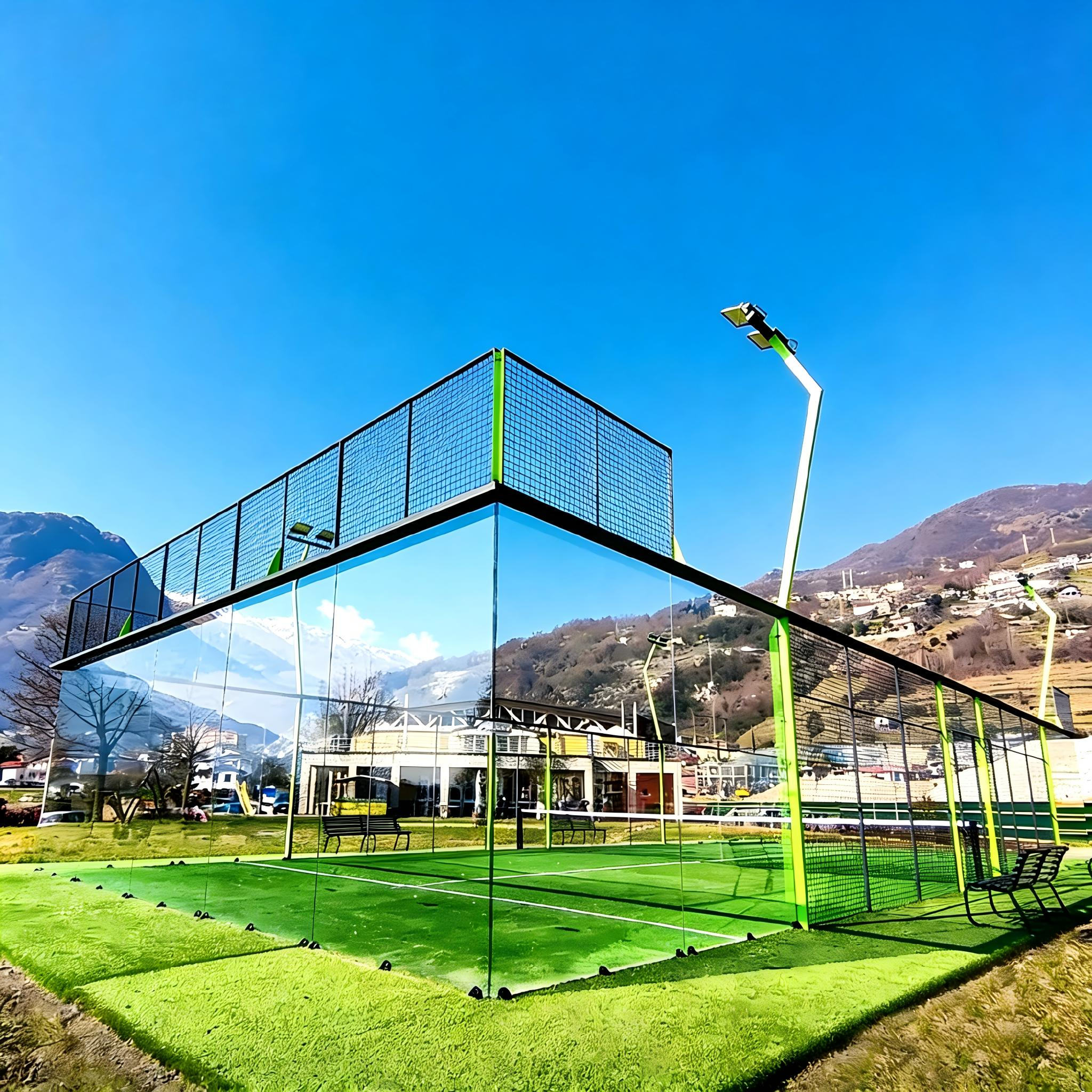
In today’s competitive sports facility landscape, visual identity is a powerful driver of customer acquisition and loyalty. Premium padel courts go beyond function—they serve as branded assets that elevate perception, engagement, and social visibility. Panoramic designs featuring expanded tempered glass panels and sleek powder-coated steel frames create an open, modern aesthetic that enhances sightlines and photogenic appeal—qualities that fuel organic social media sharing and boost tournament or event bookings. Customization options—including bespoke turf colors, integrated branding on glass walls, and coordinated fencing—transform the court into a cohesive extension of the facility’s brand identity, reinforcing recognition every time a match is shared online. For commercial clubs, this elevated aesthetic opens doors to sponsorship and partnership opportunities, as the court itself becomes a dynamic canvas for brand activations and tournament storytelling. Visually distinctive courts don’t just attract first-time visitors—they cultivate prestige, encourage repeat visits, and drive word-of-mouth referrals—turning aesthetics into a quantifiable competitive advantage.
Sustainability Leadership: Eco-Certified Materials in Modern Padel Court Construction
EPD-Verified Recycled Steel, Bio-Based Binders, and Post-Consumer Turf Yarns in Padel Court Systems
Sustainability leadership in padel court construction starts with transparent, third-party verified materials. Environmental Product Declarations (EPDs) provide rigorous, standardized data on environmental impact—enabling informed, accountable decisions. EPD-verified recycled steel used in structural frames cuts embodied carbon by up to 40% versus virgin metal. Bio-based binders—derived from renewable feedstocks like castor oil or lignin—replace petroleum-based adhesives in shock pads and sub-layers, reducing volatile organic compound (VOC) emissions without compromising performance. Post-consumer turf yarns spun from reclaimed plastic bottles divert waste from landfills while delivering reliable ball roll, traction, and UV stability. Together, these certified inputs form a high-performance surface with verifiable environmental credentials—supporting facility ESG goals, meeting green building standards, and resonating with increasingly eco-conscious players and partners.
FAQ Section
Why are premium padel court surfaces important?
Premium padel court surfaces enhance player performance, ensure safety through shock absorption, and reduce injury risk while maintaining long-term durability and reducing maintenance costs.
How does EnviroFill contribute to heat management on outdoor courts?
EnviroFill is a cryogenic polymer-based infill that reduces peak surface temperature by reflecting solar radiation and enhancing evaporative cooling, ensuring safer and more comfortable play.
What benefits do polypropylene modular tiles offer over asphalt courts?
Polypropylene modular tiles retain higher surface integrity, reduce maintenance, minimize downtime, and provide a consistent playing experience over time compared to deteriorating asphalt courts.
How do premium padel courts improve athlete safety?
Premium courts use ISO 14837-1 compliant shock pads to absorb impact, reducing stress on joints and lowering the risk of acute and overuse injuries.
How do eco-certified materials support sustainability in padel court construction?
Eco-certified materials such as recycled steel, bio-based binders, and reclaimed turf yarns reduce environmental impact, meet green building standards, and align with facility ESG goals.
Table of Contents
- Optimized Playability: How Premium Padel Court Surfaces Enhance Performance
- Proven Safety Benefits of Engineered Premium Padel Court Systems
- Long-Term Value: Durability, Lower Lifecycle Costs, and ROI of Premium Padel Court Materials
- Brand Differentiation and Facility Appeal Through Premium Padel Court Aesthetics
- Sustainability Leadership: Eco-Certified Materials in Modern Padel Court Construction
-
FAQ Section
- Why are premium padel court surfaces important?
- How does EnviroFill contribute to heat management on outdoor courts?
- What benefits do polypropylene modular tiles offer over asphalt courts?
- How do premium padel courts improve athlete safety?
- How do eco-certified materials support sustainability in padel court construction?