
 EN



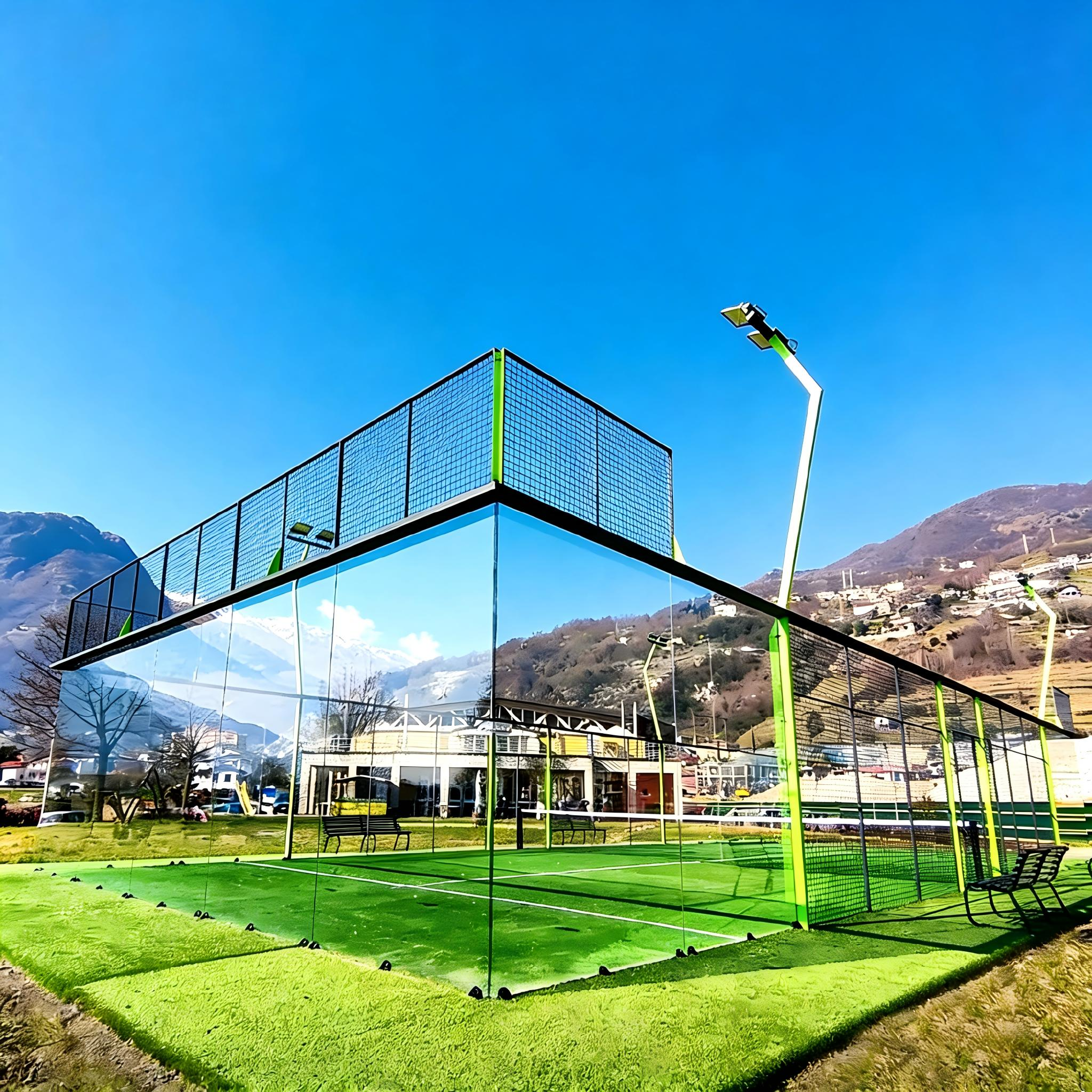
Canchas de Padel Foster Inclusive, Multi-Generational Community Engagement
How Padel’s Low-Entry Rules and Social Format Attract Diverse Age Groups and Skill Levels
Canchas de padel lower participation barriers with a compact court, underhand serve, and doubles-only format that naturally encourages teamwork. Shorter rallies and slower ball speeds—compared to tennis—make the sport accessible to beginners, while the surrounding walls keep play continuous, minimizing time spent retrieving stray shots. For older adults, the reduced running distance and lower-impact movement ease joint strain; for younger players, fast-paced net exchanges build coordination without demanding advanced technique. A 2023 global survey by Playtomic found that 68% of recreational padel players rated the sport as “easy to learn” regardless of age or fitness level—fueling annual participation growth above 20% in community centers.
Socially, every match is played as a foursome, creating an immediate social framework. Community programs often mix generations in the same session—retirees playing alongside middle-school students—turning the court into a neutral, intergenerational meeting ground. This dynamic helps bridge isolation gaps: local clubs report members forming cross-age friendships that extend beyond the facility. Because padel requires only a partner and basic court comfort, families can play together, and open-play hours welcome drop-in participants. The result is a recreation space that actively dissolves barriers of age, background, and skill—making canchas de padel a cornerstone of inclusive community life.
Real-World Impact: Madrid Municipal Program Shows 64% Uptick in Youth–Senior Co-Participation After Installing Canchas de Padel
Madrid’s municipal sports department tracked a striking outcome after converting underused concrete areas into public padel courts. In 2023, its open-access program recorded a 64% increase in shared sessions between participants under 18 and those over 65, compared to the pre-court baseline. The initiative paired youth clubs with senior centers for twice-weekly padel mornings, coached by municipal staff. Within six months, co-participation deepened qualitatively: post-session surveys showed 82% of seniors felt “more connected to younger generations,” while 76% of teenagers reported enjoying the mentor-style play.
The operating cost per session was roughly 30% lower than equivalent mixed tennis programs, thanks to padel’s higher player density per square meter. Planners attribute the jump to the sport’s forgiving learning curve and the social cohesion built into the doubles format—no line-calling disputes, constant communication, and lively points that sustain energy. The program’s success has prompted other districts to mandate at least one padel court in new community recreation projects, cementing the court’s role as a tool for intentional, measurable social integration.
Canchas de Padel Deliver High-Utilization Infrastructure Within Limited Urban Space
Space Efficiency: 40% Smaller Footprint Than Tennis Courts Enables Flexible Indoor/Outdoor Deployment
A standard padel court requires just 200 square meters—compared to a tennis court’s typical 650-square-meter footprint, including run-offs. This dramatic difference allows facility planners to install up to three padel courts in the space occupied by one tennis court. Urban sports centers can thus maximize player throughput without expanding land use. The compact design also supports installation in previously underutilized spaces: rooftop decks, converted parking garages, and narrow infill lots between buildings.
Because canchas de padel are fully enclosed with glass walls and mesh fencing, they operate indoors or outdoors with minimal noise impact—accelerating municipal approval. Modular construction enables rapid deployment and, if needed, full relocation to adapt to evolving community needs. By choosing padel, community hubs gain high-density participation infrastructure that fits seamlessly into land-constrained urban environments—transforming dead space into vibrant social and athletic hubs.
Canchas de Padel Support Long-Term Health Outcomes and Recreational Retention
Addressing Urban Inactivity: Canchas de Padel Increase Weekly Participation by 3.2x vs. Traditional Racket Sports
Urban sedentary lifestyles demand accessible, engaging sports—and canchas de padel deliver. Their smaller court and supportive walls make the game immediately enjoyable for novices while remaining challenging for seasoned players. This low-entry barrier drives consistent engagement: a 2024 survey by the Global Sport and Community Health Initiative found that community centers with padel courts recorded a 3.2x higher weekly player turnout than those offering only tennis or squash.
The reason lies in padel’s social architecture—the mandatory four-player format fosters accountability, friendly competition, and spontaneous connection, encouraging people to return regularly. Over time, this consistency yields robust long-term health outcomes. Unlike high-impact activities, padel delivers an excellent cardiovascular workout with minimal joint stress—making it sustainable across the lifespan. The rapid decision-making and hand-eye coordination required also sharpen cognitive function, while endorphin release reduces stress. This combination of physical and mental engagement makes padel a complete wellness activity that participants stick with for years—transforming sporadic exercisers into committed participants and directly addressing urban inactivity.
Operational and Economic Advantages of Integrating Canchas de Padel
From a business perspective, canchas de padel offer unmatched operational efficiency—directly translating into higher revenue potential and long-term fiscal resilience. A single traditional tennis court footprint can accommodate two to three padel courts, allowing facility managers to double or triple hourly rental capacity without acquiring additional land. This spatial economy is especially critical in high-cost, space-scarce urban environments. Coupled with padel’s mandatory four-player format, it drives a “user-per-hour” rate far exceeding singles tennis or other individual racket sports. According to the Global Padel Report, this efficient use of space contributed to venues recording a 20% higher average revenue per square meter compared to multi-use sports halls in 2023.
Equally compelling is the predictable, low-maintenance cost structure. Unlike natural grass or clay tennis courts—which require intensive watering, mowing, brushing, and line maintenance—padel courts feature durable artificial turf, glass walls, and metallic mesh fencing. Routine upkeep is limited to surface brooming (to distribute silica sand infill), periodic glass cleaning, and structural fence checks. This eliminates prohibitive labor costs and water bills tied to organic surfaces. For municipal sports centers, this predictability enables long-term budget stabilization. An analysis by a leading sports facility consultancy confirms operators can save up to $15,000 annually per court in reduced maintenance man-hours and resource consumption when switching from traditional outdoor hard-court surfaces to modern padel infrastructure—freeing capital for community programming and ensuring a higher, more sustainable return on investment.
FAQs
What makes canchas de padel suitable for all age groups?
The sport’s forgiving learning curve, smaller court size, and slower ball speeds allow beginners to enjoy the game, while older adults benefit from less strain on joints and younger players improve coordination through fast-paced exchanges.
How is padel fostering intergenerational interactions?
Padel’s doubles-only format and community programs integrate players of different generations, creating opportunities for retirees to bond with younger participants, bridging isolation gaps and promoting friendships.
What are the economic advantages of canchas de padel in urban areas?
Padel courts require 40% less space than tennis courts, minimize maintenance costs, and enhance revenue potential by accommodating more players per square meter.
How does padel improve long-term health outcomes?
Padel combines low-impact, cardiovascular exercise with social interaction and cognitive engagement, fostering consistency in physical activity and reducing urban inactivity.
Table of Contents
- Canchas de Padel Foster Inclusive, Multi-Generational Community Engagement
- Canchas de Padel Deliver High-Utilization Infrastructure Within Limited Urban Space
- Canchas de Padel Support Long-Term Health Outcomes and Recreational Retention
- Operational and Economic Advantages of Integrating Canchas de Padel
- FAQs