
 EN
EN


Artificial Turf and Sand Infill: Performance Degradation Over Time
Signs of artificial turf wear affecting ball bounce and player traction
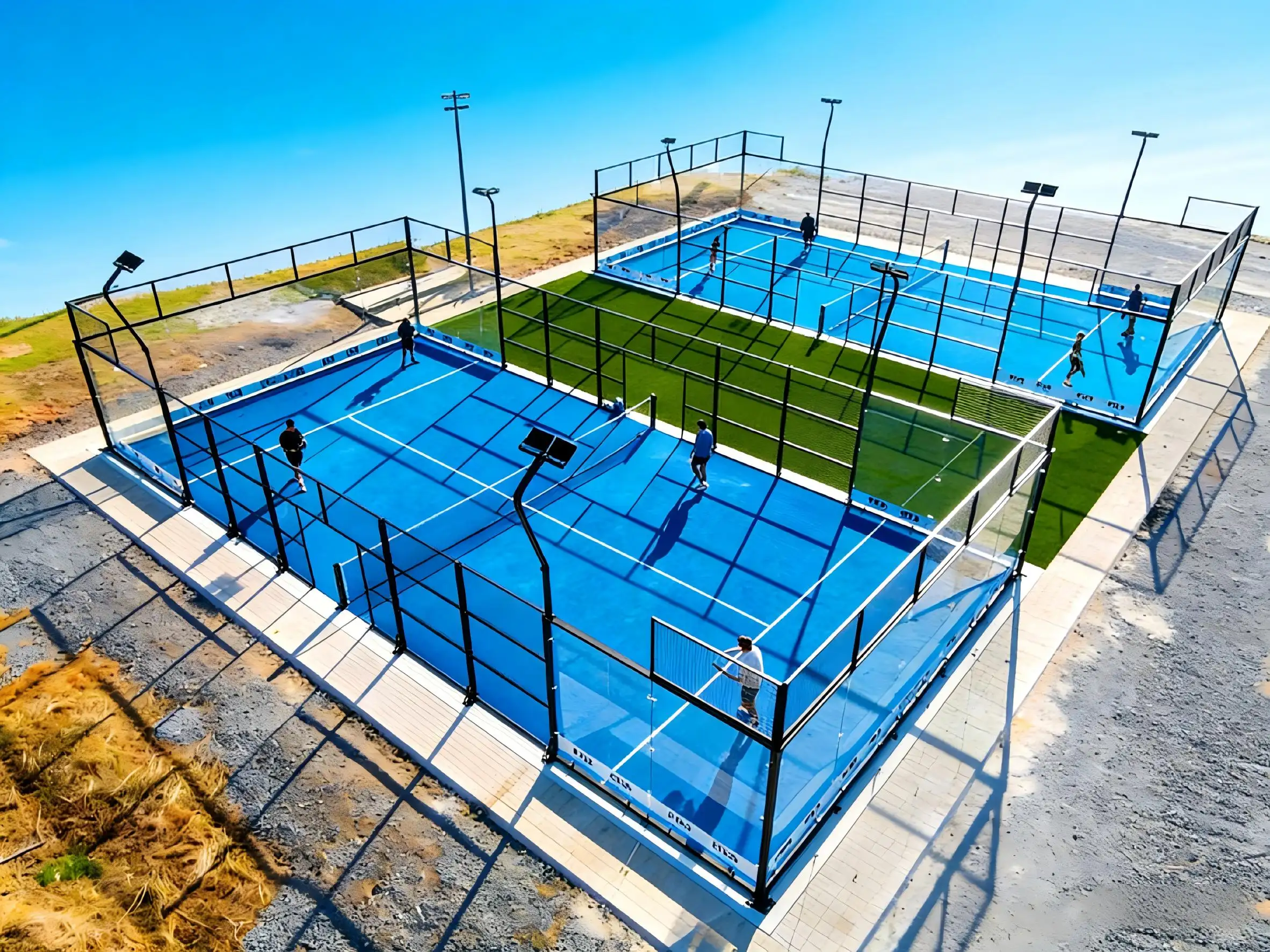
Over time, artificial turf on a padel court loses its original bounce and grip. Foot traffic and friction compress the pile—especially in high-use zones like service boxes—flattening fibers and reducing ball rebound height. This leads to inconsistent bounces that disrupt rallies. Surface friction also shifts: polished fibers create slipperiness, while exposed backing increases unintended grip, both compromising lateral stability. Players may notice increased sliding or sudden, jarring catches underfoot—clear signs the surface has fallen outside its optimal performance window.
Sand infill compaction, contamination, and replenishment best practices
Sand infill plays a critical role in shock absorption, stability, and drainage—but degrades with use and exposure. Compaction hardens the surface, diminishing cushioning and impeding water flow, which can lead to pooling and slippery conditions. Dust, algae, and organic debris further reduce infill effectiveness by clogging voids and altering density. To maintain playability, operators should conduct quarterly inspections and perform seasonal deep cleaning using vibrating sieves to remove contaminants and restore porosity. Top-ups should maintain infill depth at 15–20 mm. Aerating the layer between top-ups helps sustain even distribution and resilience—extending turf life and lowering long-term replacement costs.
Structural Components: Glass Walls, Fencing, and Nets
Glass wall clarity, impact resistance, and safety compliance timelines
Tempered glass walls must remain optically clear for accurate ball tracking; pitting, scratching, or discoloration distorts depth perception and undermines play quality. Impact resistance also declines over time due to micro-fractures from repeated ball strikes and thermal cycling. While the International Padel Federation (FIP) recommends replacing glass panels every 5–7 years, annual inspections are essential. A simple field test—viewing a straight line through the glass to check for distortion—can identify early degradation. Delaying replacement not only compromises player safety but risks non-compliance with EN 12150 standards for thermally toughened soda-lime silicate glass, increasing liability in case of breakage.
Fence stability, net tension retention, and corrosion risks
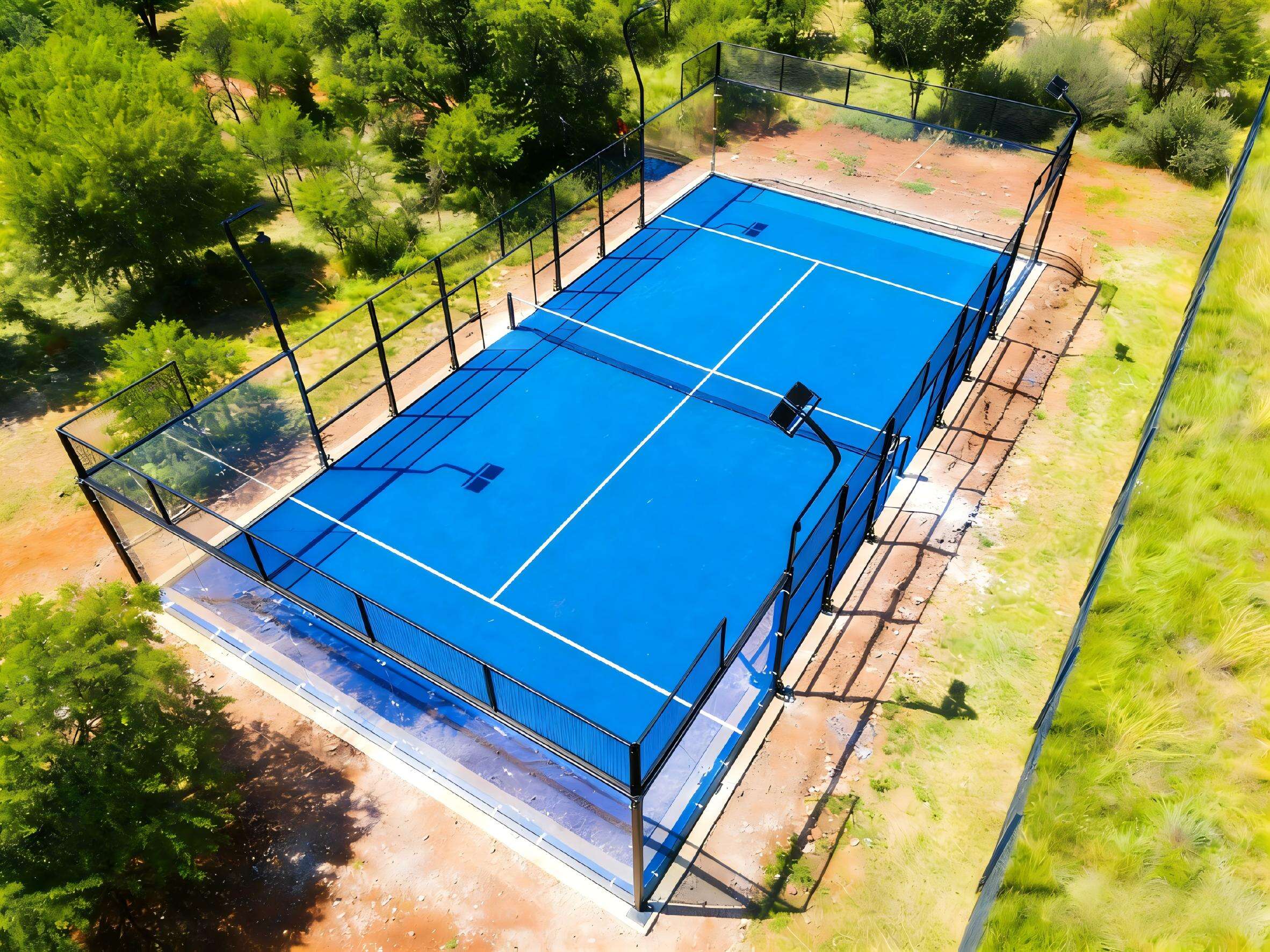
Perimeter fencing must remain rigid to contain balls and protect spectators. Though galvanized steel or aluminum posts resist corrosion, weld points and base plates are vulnerable—especially in humid or coastal environments. Net tension is equally vital: a sagging net causes unpredictable rebounds and frustrates players. FIP specifies a net drop height of 1.0–1.5 m, maintained using a calibrated tension gauge every three months. UV exposure and moisture degrade synthetic net fibers and corrode metal hardware over time. Proactive replacement—typically every 3–5 years for nets and fencing—preserves structural integrity and ensures consistent court performance.
Safety and Regulatory Implications of Outdated Padel Tennis Court Equipment
Using equipment beyond its safe service life significantly raises injury risk and exposes facilities to regulatory penalties. Worn turf reduces traction, contributing to slips and falls; degraded glass may shatter unexpectedly; rusted fencing and loose net posts introduce trip hazards and instability; and failing lighting strains visual acuity, leading to misjudged shots. These conditions violate core safety benchmarks outlined in FIP guidelines and harmonized European standards—including EN 12150 for glass and EN 1263-1 for sports netting—triggering potential certification loss, fines, or legal liability. Facility managers must prioritize functional safety over cosmetic appearance, replacing components once they no longer meet objective performance thresholds.
How aging equipment increases injury risk and violates facility standards
Aging equipment erodes multiple safety margins simultaneously: reduced traction, diminished impact resistance, compromised structural rigidity, and inadequate lighting all elevate acute injury risk. More critically, they breach enforceable standards—such as minimum lux levels for LED lighting per EN 12464-1 and tensile strength requirements for netting. Non-compliance isn’t theoretical: audits increasingly reference real-time performance data, not just visual inspection. Operators who delay replacement until failure occurs face heightened liability—not only for injuries but also for failing to uphold duty-of-care obligations under national health and safety legislation.
Evidence-Based Replacement Schedules for Key Padel Tennis Court Equipment
Effective lifecycle management relies on data—not assumptions. Three maintenance strategies offer distinct advantages: scheduled replacement (simple but potentially wasteful), preventive maintenance (calendar- or usage-based servicing), and condition-based maintenance (CBM), which uses objective metrics to trigger action only when needed. CBM delivers the strongest return: sensors and routine measurements—turf pile height, glass clarity scores, net tension readings, and infill density logs—enable precise, evidence-driven decisions. For example, heavy-use courts may require turf replacement at five years, while low-traffic facilities could extend that to seven—provided pile recovery, fiber integrity, and infill performance remain within FIP-recommended ranges. Integrating maintenance history with performance analytics transforms reactive repairs into proactive, cost-optimized lifecycle planning across all key padel tennis court equipment.
FAQ
Why does artificial turf lose performance over time?
Artificial turf degrades due to foot traffic and friction, which compress the pile and reduce its bounce and grip. Over time, the fibers flatten and surface friction changes, causing unsafe play conditions.
How should sand infill be maintained?
Sand infill should be inspected quarterly and deep cleaned seasonally with vibrating sieves. Infill depth should be maintained at 15–20 mm, with aeration performed between top-ups to ensure even distribution.
What are the recommended replacement intervals for glass walls and nets?
The International Padel Federation (FIP) recommends replacing glass walls every 5–7 years and nets typically every 3–5 years, depending on usage and environmental exposure.
What are the risks of not replacing outdated padel tennis court equipment?
Outdated equipment increases injury risk, violates safety standards, and may lead to certifications loss, fines, or liability. Examples include reduced traction, shattering glass, or degrading fences and nets.
How can condition-based maintenance improve court management?
Condition-based maintenance uses objective metrics, such as turf pile height, glass clarity, and net tension, to initiate repairs only when necessary, reducing costs and prolonging equipment life.
Table of Contents
- Artificial Turf and Sand Infill: Performance Degradation Over Time
- Structural Components: Glass Walls, Fencing, and Nets
- Safety and Regulatory Implications of Outdated Padel Tennis Court Equipment
- Evidence-Based Replacement Schedules for Key Padel Tennis Court Equipment
-
FAQ
- Why does artificial turf lose performance over time?
- How should sand infill be maintained?
- What are the recommended replacement intervals for glass walls and nets?
- What are the risks of not replacing outdated padel tennis court equipment?
- How can condition-based maintenance improve court management?