
 EN
EN



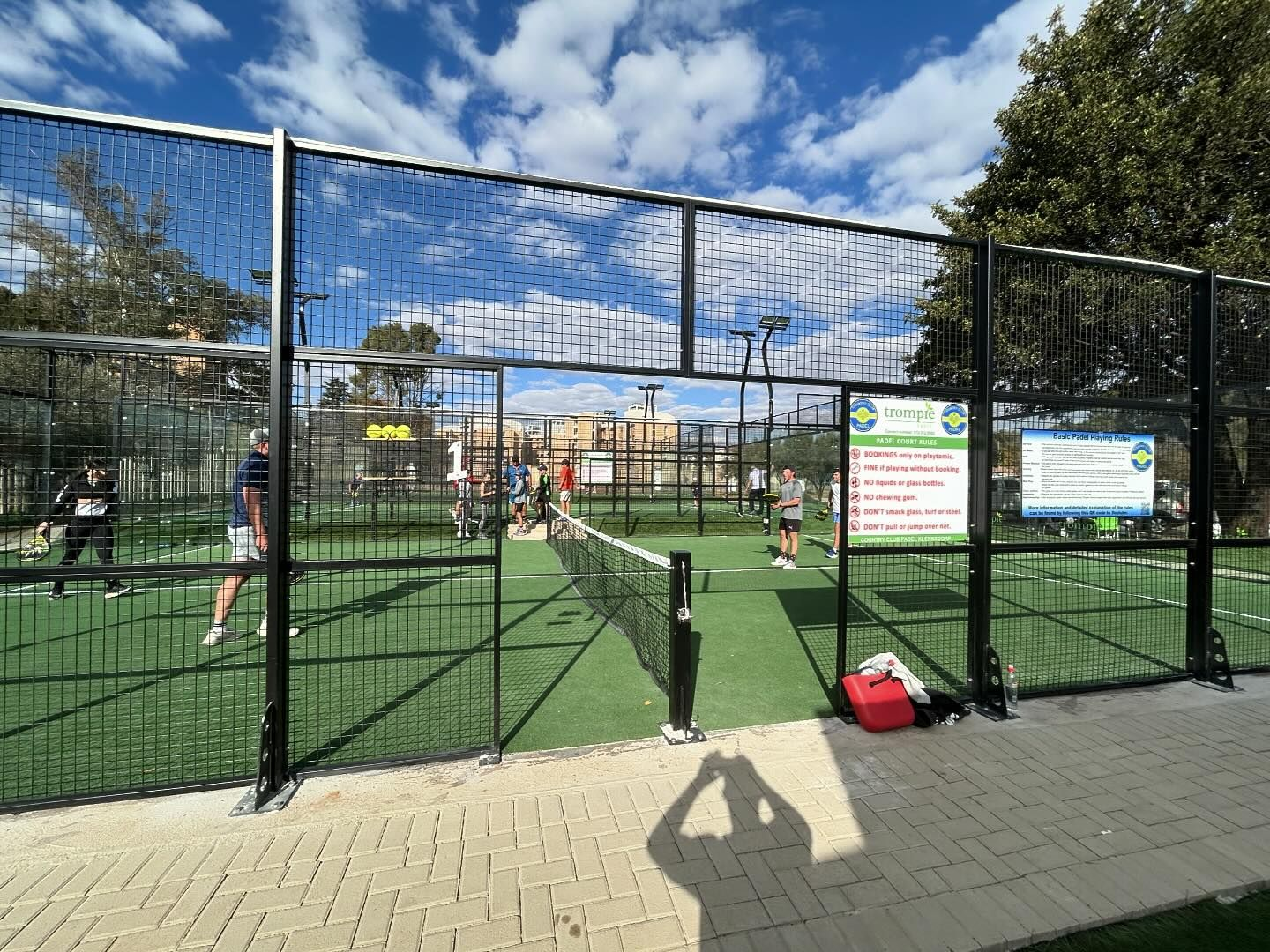
Padel Court Dimensions and Layout: FIP-Compliant Sizing and Safety Zones
Exact Length, Width, and Clearance Requirements per FIP Regulation
According to the International Padel Federation's 2023 Technical Manual, standard padel courts need to be precisely 20 meters long and 10 meters wide, not counting the boundary lines themselves. There's a small margin for error though, around plus or minus half a percent. When it comes to space above the court, players need at least 6 meters of clearance so they can hit those high lobs without worrying about lights getting in the way. For bigger tournaments though, organizers usually go for 8 meters of overhead space since this allows better lighting equipment and meets broadcasting standards. The service line sits right at 6.95 meters away from the net, while the net itself stands 0.88 meters tall in the middle point, rising slightly to 0.92 meters at each post location.
Mandatory Run-Off Area and Structural Boundary Tolerances
A minimum safety buffer ensures player mobility and collision prevention:
- 3 meters behind each baseline
- 2 meters along each side wall
This yields a total installation footprint of 26 m × 16 m (416 m²). Structural boundaries require tempered glass walls at least 3 meters high—engineered to withstand 500 N/m² wind loads. Outdoor courts should be oriented east-west to minimize sun glare; indoor facilities require humidity-controlled ventilation. Coastal installations must include subsurface drainage capable of handling ≥50 mm/hour rainfall. Boundary tolerances are verified using laser measurement tools during official FIP audits.
Padel Court Enclosure and Surface: Certified Fencing, Glass, and Playing Surface
Tempered Glass Walls and Metal Fencing: Strength, Height, and Impact Resistance Standards
FIP-compliant enclosures combine 10–12 mm tempered glass walls with galvanized steel fencing to ensure durability and consistent ball rebound. The full enclosure must reach 4 meters in height, with joint tolerances ≤2 mm to eliminate deflection anomalies. Key performance criteria include:
- Impact resistance: Glass panels tested per EN 12150 for shatter-safe fragmentation
- Structural rigidity: Fencing must resist 500 N force without permanent deformation
- Corrosion protection: Zinc coating ≥120 g/m² for outdoor use
The transition zone between glass and mesh requires reinforced framing to preserve uniform rebound behavior across all surfaces.
Surface Material Certification: EN 14877 (sports surfaces), EN 12150 (glass), and ISO 9001 Quality Assurance
Playing surfaces must meet EN 14877 certification, verifying performance under real-world play conditions. Critical metrics include:
| Parameter | Test Method | Performance Threshold |
|---|---|---|
| Vertical deformation | DIN 18032-2 | 4–8 mm |
| Shock absorption | EN 14808 | 25–50% |
| Slip resistance | DIN 51130 | Class R9–R11 |
Manufacturers must hold ISO 9001 certification, and installers must provide batch-tested material traceability reports covering the full supply chain—from raw materials to on-site installation.

Padel Court Lighting and Environmental Performance for Tournament-Ready Play
Lux Levels, Uniformity Ratios, and Glare Control for FIP-Certified Competition
The FIP standard requires an average of 500 lux illumination throughout every part of the court, making sure there's at least a 0.7 uniformity ratio so players don't get blinded by shadows when the action moves fast. To tackle glare issues, facilities install those special asymmetric LED lights with a warm white 4000K color temp, usually hung between six and eight meters high. This setup keeps the Unified Glare Rating below 19, which means no harsh reflections messing up gameplay. What's really impressive though is how much these modern lighting systems cut down on power usage. We're talking around 65 to even 80 percent less energy than old school lighting solutions, all while still providing that crystal clear visibility needed for TV broadcasts and ensuring balls stay visible across the entire court surface.
Verifying Padel Court Compliance: Measurement Protocols, Certifications, and Audit Readiness
Third-Party Validation: CE Marking, ISO 14001, and FIP Technical Audit Checklist
Getting independent verification really matters when it comes to making sure everything lines up with regulations and actually works reliably over time. Take CE marking for instance, it basically proves that structural parts meet those EU mechanical safety standards we all have to follow. Then there's ISO 14001 which isn't just another certificate but shows manufacturers are serious about sustainability practices throughout their operations. When auditors run through the FIP technical checklist, they're looking at things like whether dimensions stay within that tight ±0.5% range, if glass can withstand impacts according to EN 12150 standards, and checking that surfaces maintain consistent friction levels per EN 14877 requirements. Most certified facilities these days rely heavily on digital documentation systems. These platforms track material sources, keep copies of those important EN 1090 steel frame certificates, and log all maintenance activities so audits go smoothly. Companies that get ahead of compliance issues tend to save around 18 months off potential project timelines while maintaining top quality standards needed for international competitions. Regular quarterly calibrations plus special humidity tests for installations near coastlines help prevent performance problems down the road when salt air starts eating away at materials.
Table of Contents
- Padel Court Dimensions and Layout: FIP-Compliant Sizing and Safety Zones
- Padel Court Enclosure and Surface: Certified Fencing, Glass, and Playing Surface
- Padel Court Lighting and Environmental Performance for Tournament-Ready Play
- Verifying Padel Court Compliance: Measurement Protocols, Certifications, and Audit Readiness