
 EN
EN



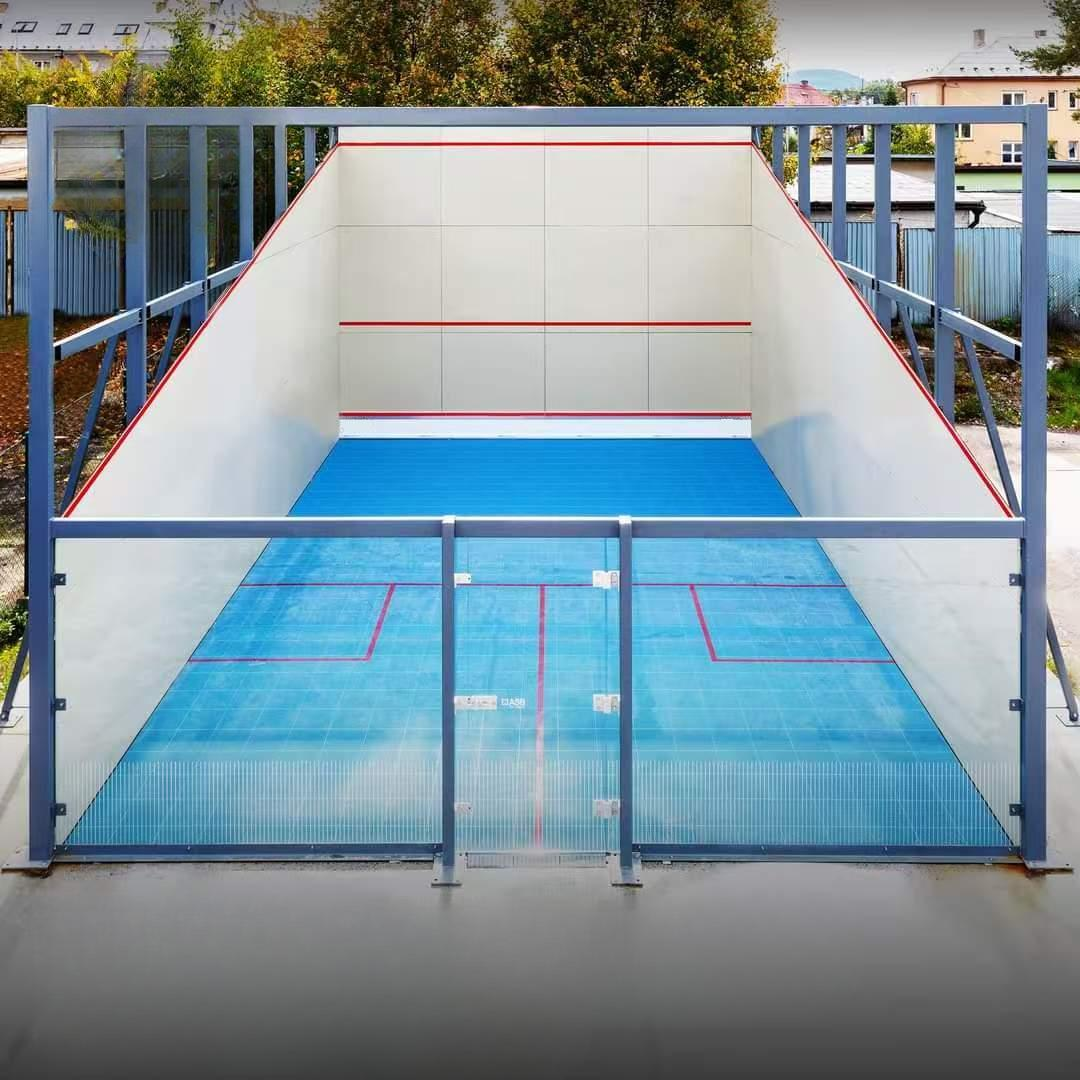
Why Integrate a Squash Court with Your Padel Facility?
Adding a squash court to your padel facility creates a complementary sports portfolio that attracts a wider demographic. While padel appeals to social doubles players, squash draws individuals seeking high-intensity exercise and a strong competitive scene. This dual offering maximizes court utilization across peak and off-peak hours—many clubs report up to 20% higher membership retention because players can switch between sports without leaving the venue. A single squash court occupies roughly the same footprint as a padel court (9.75 m × 6.4 m vs. 20 m × 10 m), making spatial integration straightforward. Operationally, shared amenities—including changing rooms, lighting control systems, and lounge areas—serve both sports, reducing per-court overhead. The financial logic is clear: a combined facility captures more player revenue per square meter and strengthens the club’s position as a year-round racket-sports destination.
Strategic Space Planning for Dual Racket Sports
Designing a facility that houses both padel and squash courts requires deliberate space allocation to maximize court count while maintaining player comfort and operational efficiency.
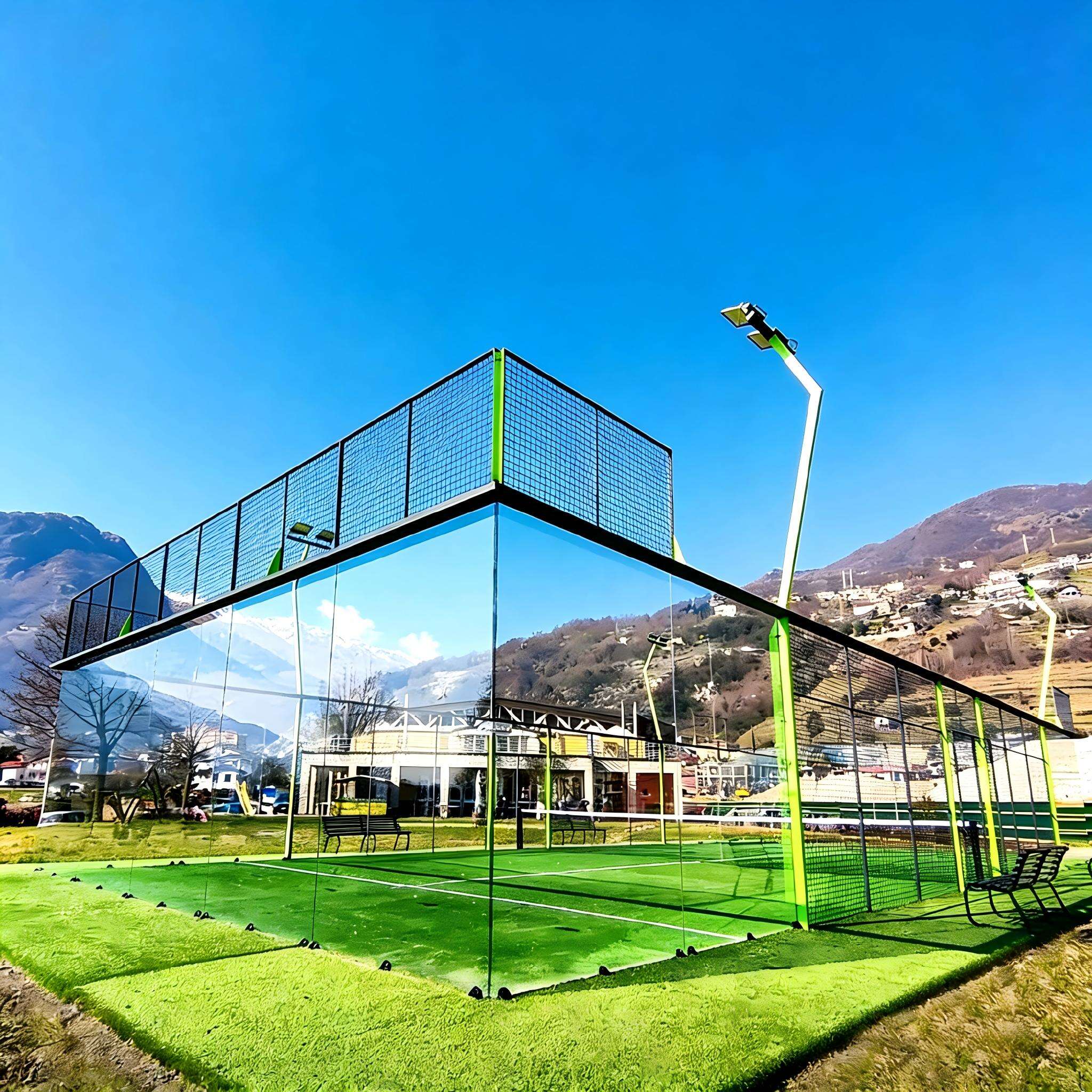
Optimizing Footprint: Shared Circulation, Structural Walls, and Vertical Stacking
Shared circulation corridors between court blocks serve both sports, reducing dead space. Aligning squash courts along a structural wall that also supports padel court back walls creates a unified load-bearing grid. Vertical stacking—placing squash courts directly above a padel court—is viable when floor slabs meet vibration-dampening standards; squash requires stiffer surfaces to prevent ball deviation, and modern engineered slabs can satisfy this requirement. This approach increases court density by up to 20% on the same land parcel. To avoid conflicts, designate separate entry points for players and maintenance staff, and consolidate storage zones for both sports in secure, shared locations.
Zoning & Permitting: Leveraging Mixed-Use Designations for Faster Approvals
Many municipalities classify racket sports facilities under mixed-use zoning—especially when combined with food services or retail—making padel’s social profile a strategic asset in permitting. Padel can help qualify a project for a conditional-use permit that also covers squash. When applying, emphasize squash’s reduced noise impact (particularly with masonry back walls instead of glass) and its lower height requirement (5.6 m vs. padel’s 9.1 m). Submitting a unified site plan with shared parking—allocating approximately one space per two courts—streamlines hearings. Early engagement with local planning boards can cut approval timelines by 30 to 60 days.
Unified Construction Standards: Foundation, Surfacing, and Lighting
Implementing shared construction standards for both squash and padel courts delivers significant cost savings and ensures consistent quality. Unified specifications minimize material waste and streamline contractor coordination—critical for facility owners prioritizing efficiency and long-term durability.
Harmonizing Surface Systems: Meeting Both ISO 20129-1 (Squash) and FIP (Padel) Requirements
Selecting surfaces that satisfy both ISO 20129-1 for squash ball rebound consistency and FIP standards for padel court slip resistance requires careful evaluation. Leading providers offer dual-certified coatings tested to both standards—preserving each sport’s distinct play characteristics while enabling shared maintenance protocols. Proper installation ensures longevity and reduces resurfacing frequency, supporting both performance integrity and lifecycle cost control.
Lighting Layouts That Serve High-Speed Play in Both Sports Without Glare or Shadows
Strategic lighting placement eliminates glare and shadows critical for tracking fast-moving balls in both sports. Optimal layouts use asymmetric LED fixtures with precise beam angles, mounted at heights accommodating squash’s vertical play and padel’s lateral movement. Uniform illuminance levels (300–500 lux) meet league requirements while minimizing spill light—enhancing visual clarity for players and reducing energy consumption through efficient, dimmable technology.
Operational Synergies and ROI Enhancement
Integrating a squash court into an existing padel facility unlocks powerful operational synergies that directly boost return on investment. Shared reception, locker rooms, café areas, and a unified booking and membership system reduce per-sport overhead and maximize cross-sport utilization. Maintenance crews service both surfaces during a single visit, cutting labor costs. Crucially, the combination extends peak-hour revenue: padel players often book back-to-back sessions with squash, increasing average spend per visit. Well-planned dual-sport facilities achieve 20–30% higher revenue per square foot compared to single-sport venues, as idle court time is minimized. Tournament hosting for both sports further broadens event income streams—leveraging cross-promotion, shared staffing, and integrated marketing. By capitalizing on these cross-utilization efficiencies, the initial investment in a squash court pays off faster through lower operating costs and higher overall asset performance.
FAQ
Q: Why should I integrate a squash court with a padel facility?
A: Integrating a squash court broadens your facility’s appeal, attracting both social padel players and competitive squash enthusiasts. This mix increases court usage, maximizes membership retention, and heightens per-square-meter revenue.
Q: How does space planning work for dual racket sports?
A: By utilizing shared circulation spaces, aligning structural walls, and employing vertical stacking techniques with vibration-dampened slabs, facilities can be efficiently designed to accommodate both sports without sacrificing player comfort.
Q: Are there zoning challenges for facilities with squash and padel courts?
A: Many municipalities permit racket sports under mixed-use zoning. Padel’s social aspect can help in securing conditional-use permits benefiting both sports, particularly when combined with food or retail services.
Q: How can I ensure the courts meet both sports’ technical standards?
A: Select surfaces and systems that comply with ISO 20129-1 for squash and FIP standards for padel to ensure playability and longevity. Dual-certified materials and proper installation preserve performance integrity.
Q: Does integrating these courts improve ROI?
A: Yes, shared infrastructure and maintenance significantly lower costs, while dual-sport offerings boost revenue through higher player spending, tournament hosting, and efficient space utilization.