
 EN
EN


Average Padel Tennis Court Cost: Core Range and Key Market Benchmarks
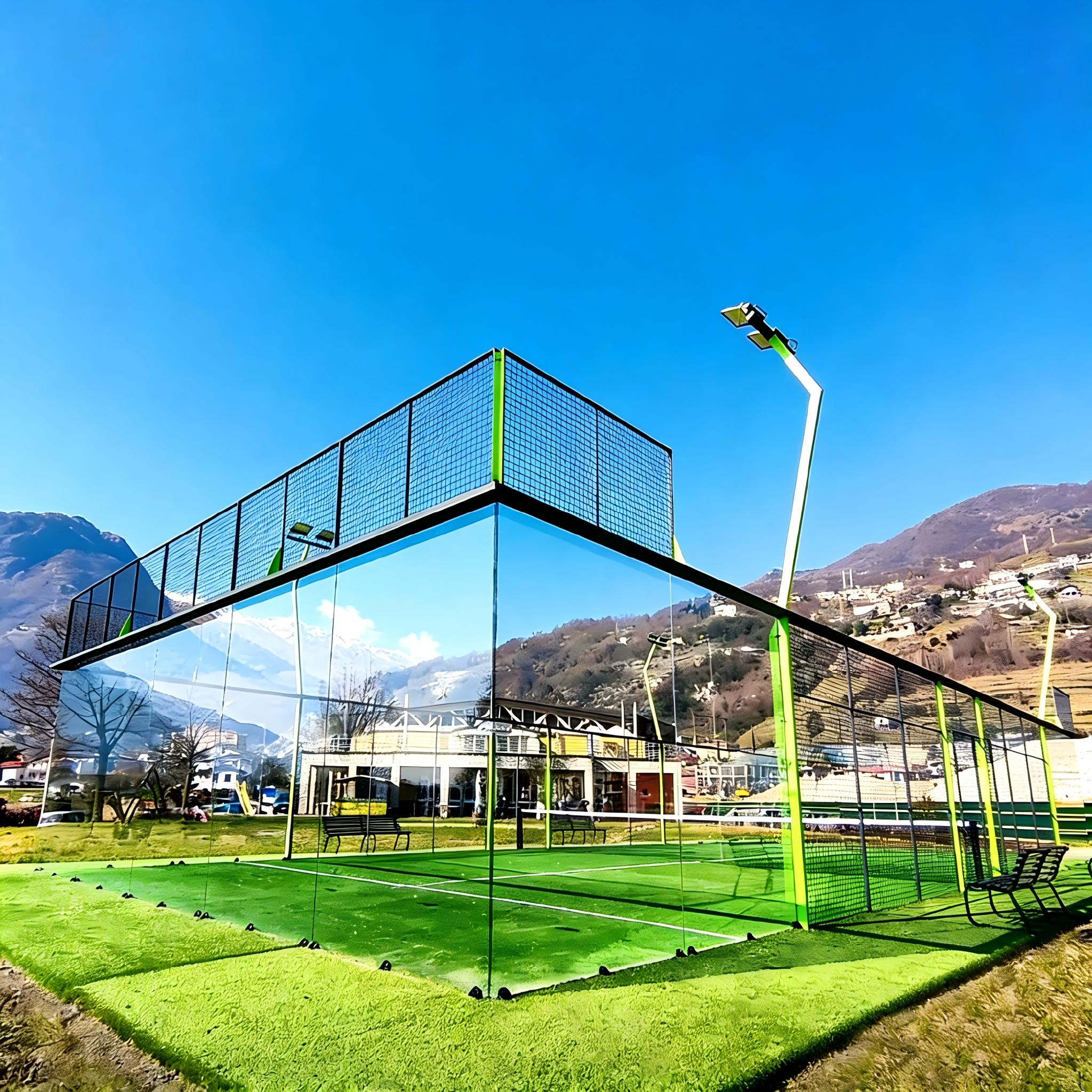
A standard single padel tennis court installation typically ranges from $47,000 to $83,000, reflecting regional differences in labor rates, material quality, and site conditions. A basic outdoor court—featuring standard artificial turf and galvanized steel framing—lands near the lower end, while a premium indoor court with tempered glass walls, professional-grade lighting, and advanced surface coatings often exceeds $75,000. Buyers should budget an additional 10–15% for contingencies such as geotechnical adjustments or shipping logistics. Because local labor costs and permitting fees can shift final pricing by up to 20%, comparing detailed supplier quotes is essential. Always request a line-item breakdown covering foundation work, steel structure, glass panels, turf, and electrical systems—this transparency ensures accurate, apples-to-apples comparisons.
Padel Tennis Court Cost Breakdown: Major Components and Hidden Expenses
Understanding the full cost of a padel tennis court requires dissecting both visible structural elements and less obvious line items. The table below reflects current market data for turnkey installations, with total costs ranging from $55,500 to $93,000.
| Component | Estimated Cost Range (USD) | Typical % of Total |
|---|---|---|
| Site Preparation | $8,000–15,000 | 15–20% |
| Foundation & Base | $12,000–18,000 | 20–25% |
| Walls & Glass | $15,000–25,000 | 25–30% |
| Padel Turf | $6,000–12,000 | 10–15% |
| Net System | $1,500–3,000 | 3–5% |
| Lighting | $5,000–8,000 | 8–10% |
| Labor & Installation | $8,000–12,000 | 12–18% |
Walls and glass, foundation, and turf collectively account for roughly 60–70% of total cost—making them the most impactful areas for budget planning. Yet smaller components, if overlooked, can meaningfully inflate the final figure.
Essential Construction Elements: Foundation, Steel Frame, Glass Enclosure, and Artificial Turf
The foundation and steel frame form the structural backbone. A properly compacted concrete base costs $12,000–18,000; the galvanized steel frame adds durability but also material expense. Tempered glass walls—the single largest line item at $15,000–25,000—represent 25–30% of total cost; impact-resistant or thicker glass further increases this outlay. Artificial turf ranges from $6,000–12,000 depending on fiber composition, pile height, and UV stabilization. While lower-cost turf reduces upfront investment, it often degrades faster—raising long-term maintenance and replacement expenses. Together, these four elements define playability, safety, and longevity—and warrant proportionate budget attention.
Often-Overlooked Costs: Ball Stop Netting, Zinc Primer, Lighting, Shipping, and Site Logistics
Several secondary expenses are frequently underestimated. Ball stop netting—critical for safety and boundary control—adds $1,500–3,000. Zinc-rich epoxy primer applied to steel beams prevents corrosion in humid or coastal environments, costing $500–1,000. LED lighting systems for evening use run $5,000–8,000 and include pole mounting, controls, and wiring. Shipping fees for prefabricated components vary by distance and accessibility but may add 5–10% to material costs—especially for remote or island locations. Site logistics—including excavation, drainage upgrades, and waste removal—are often bundled into site preparation but can escalate significantly if soil testing reveals poor load-bearing capacity or high water tables. Failing to account for these items risks pushing the final cost 10–15% above initial estimates—underscoring the need for a comprehensive, line-item quote from the outset.
Key Factors That Influence Padel Tennis Court Construction Cost
Several variables determine the final price of a padel tennis court. Understanding these factors helps planners set realistic budgets and avoid unexpected overruns during construction.
Indoor vs. Outdoor Installation, Surface Specifications, and Climate-Resilient Design
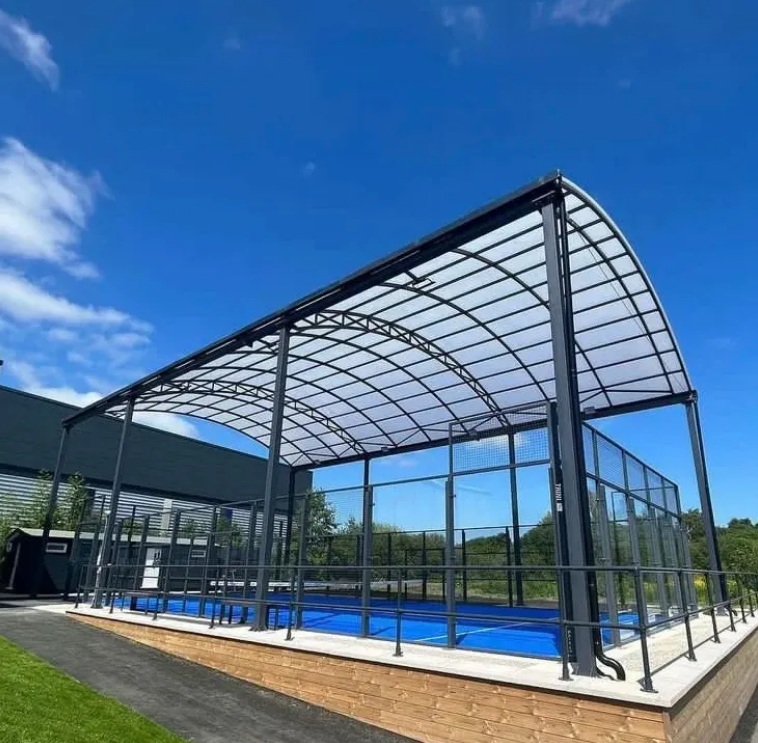
Indoor courts demand higher ceilings, HVAC integration, acoustic treatment, and specialized lighting—driving costs well above comparable outdoor builds. Outdoor courts require robust drainage, weather-resistant materials, and UV-stable surfacing but avoid major structural overhead like roofing or climate control. Surface specifications directly affect performance and lifecycle: high-density, UV-stabilized turf improves consistency and durability but commands a premium. Climate-resilient design is non-negotiable in challenging environments—coastal sites, for example, require zinc-rich epoxy primers on all exposed steel to prevent salt-induced corrosion, adding a targeted but necessary cost layer.
Site Preparation, Geotechnical Requirements, and Permitting Complexity
Site condition is one of the strongest predictors of foundation cost. A level, pre-poured concrete slab cuts foundation expenses dramatically; conversely, raw land may require extensive grading, sub-base reinforcement, and new concrete or asphalt pouring. Geotechnical testing—often overlooked—is essential to confirm soil bearing capacity and inform footing depth, drainage strategy, and potential need for engineered solutions. Finally, permitting complexity varies widely: jurisdictions differ in building code enforcement, noise ordinances, zoning allowances, and environmental review requirements. Navigating these processes takes time and expertise—and delays or revisions can increase soft costs significantly. Engaging a contractor familiar with local regulatory pathways helps streamline approvals and protect the timeline and budget.
Frequently Asked Questions (FAQs)
What is the average cost of constructing a padel tennis court?
The average cost of constructing a single padel tennis court ranges between $47,000 and $83,000. Factors such as indoor versus outdoor construction, material quality, and regional costs can influence the final pricing.
What are the main components driving padel tennis court costs?
The major cost components include site preparation, foundation and base, walls and tempered glass, artificial turf, net systems, lighting, and labor. These account for 60–70% of total construction costs.
Are there any hidden costs to consider?
Yes, hidden costs may include ball stop netting, zinc-rich primer for corrosion protection, shipping of prefabricated components, site logistics, and permitting fees. These can raise the project’s total cost by 10–15%.
How can I reduce the overall cost of building a padel tennis court?
To reduce costs, consider using lower-grade materials for non-essential components, optimizing site preparation by selecting a level plot, and properly comparing supplier quotes with a detailed line-item breakdown.
What is geotechnical testing, and why is it important?
Geotechnical testing evaluates soil bearing capacity and other subsurface conditions. It helps determine the appropriate foundation depth and drainage setup, ensuring the construction is durable and safe.