
 EN
EN



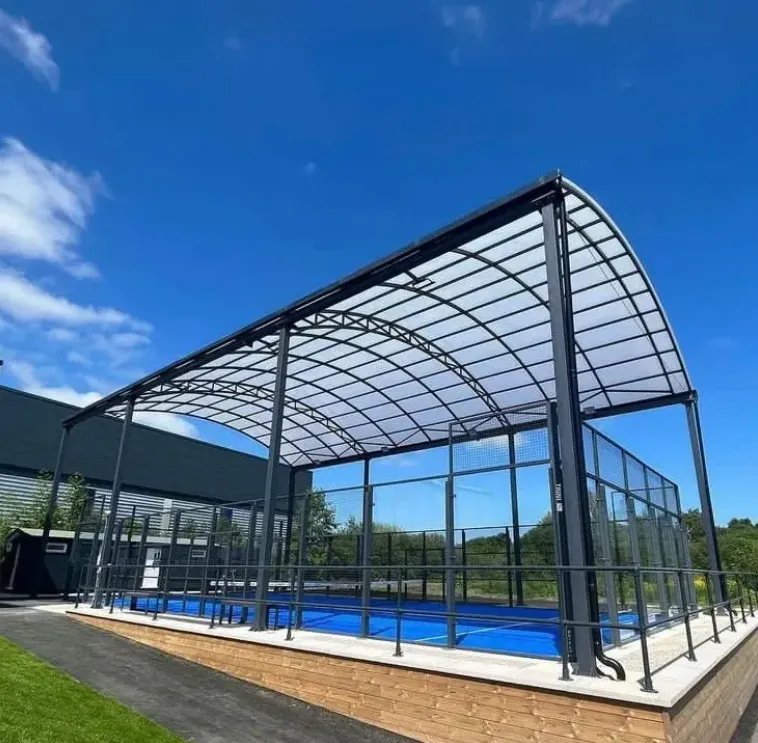
Urban Demand Drivers for Canchas de Padel
Space-Efficient Design Meets High-Density City Living
In Latin America’s rapidly growing metropolitan areas—Buenos Aires, Mexico City, and São Paulo—land for sports infrastructure is scarce and prohibitively expensive. Padel courts solve this challenge with exceptional spatial efficiency: a single standard tennis court can accommodate up to three padel courts, tripling playing capacity per square meter. This compact footprint makes padel uniquely suited to high-density neighborhoods where real estate costs are highest. Developers and municipal planners benefit from higher player throughput, faster booking turnover, and reduced land acquisition expenses. Enclosed glass-and-mesh walls also enable vertical integration—courts can be stacked or installed on rooftops—further optimizing underutilized urban space. Combined with the sport’s fast-paced, social doubles format, this efficiency transforms constrained sites into vibrant, revenue-generating community assets.
Low Entry Barriers Attract Youth, Families, and Recreational Players
Padel’s accessibility lowers participation thresholds across age, ability, and income levels. Its simplified rules, lightweight rackets, and smaller court reduce physical and technical demands compared to tennis or basketball—enabling beginners to sustain rallies within minutes. This rapid entry point appeals to youth seeking dynamic group activity, families looking for inclusive recreation, and older adults drawn to its lower injury risk. Rental equipment is widely available and affordable, and court fees—typically split among four players—are significantly lower than alternatives. In cities where discretionary spending is limited, this cost-effectiveness expands the player base meaningfully. Recreational leagues, drop-in sessions, and school partnerships further fuel organic growth, creating a self-reinforcing cycle: more players drive demand for more courts, which in turn increases visibility and access across urban communities.
Canchas de Padel as Catalysts for Social and Commercial Ecosystems
Co-Location with Malls, Residential Complexes, and Fitness Hubs
Canchas de padel increasingly serve as strategic anchors in mixed-use developments—not just as amenities, but as economic and social catalysts. Inside shopping malls, a single court draws players and spectators who extend dwell time and boost spending across food, retail, and entertainment outlets. In residential towers, padel facilities have been shown to increase unit values by 5–10%, according to regional real estate analyses—making them powerful differentiators in competitive housing markets. Fitness centers integrate courts to deepen member engagement: gym users who try padel often upgrade to premium memberships or private coaching, increasing lifetime customer value. The sport’s inherent social structure—doubles-only play, team-based leagues, family tournaments—naturally fosters community ties, transforming venues into recurring gathering spaces. For city planners, embedding padel courts within existing infrastructure avoids the need for dedicated sports zoning, aligning recreational investment with broader goals of land-use efficiency and neighborhood vitality.
Policy and Investment Frameworks Accelerating Canchas de Padel Deployment
Municipal Zoning Updates and Spain-Latin America Knowledge Transfer
Across Latin America, local governments are reclassifying canchas de padel as essential recreational infrastructure—removing them from “niche” or “commercial leisure” categories. This regulatory shift streamlines permitting, unlocks mixed-use parcels, and reduces approval timelines. Much of this momentum stems from Spain’s decades-long institutional integration of padel: standardized court dimensions (20 × 10 m), lighting specifications, acoustic guidelines, and safety protocols are now being directly adopted by municipalities in Mexico, Colombia, and Chile. Several Mexican cities, for instance, have cut average planning cycles from 18 months to under six by referencing Spanish municipal playbooks. This knowledge transfer delivers predictability for investors and accelerates deployment in high-demand urban corridors.
Padelfund Initiatives and Franchise Models Lowering Capital Risk
Specialized investment vehicles—often branded as Padelfunds—are emerging to pool capital for multi-court developments, distributing financial risk across geographies and asset types. Simultaneously, franchise models offer turnkey solutions: pre-engineered court designs, bulk-sourced materials, standardized maintenance contracts, and integrated booking platforms. These packages typically reduce upfront capital requirements by 30–40% versus self-built facilities. Operators gain not only cost savings but also operational support—including player retention tools, digital marketing templates, and coach certification pathways. Together, these innovations democratize access to padel infrastructure, enabling small and medium-sized investors—previously excluded from large-scale sports development—to enter the market confidently and sustainably.
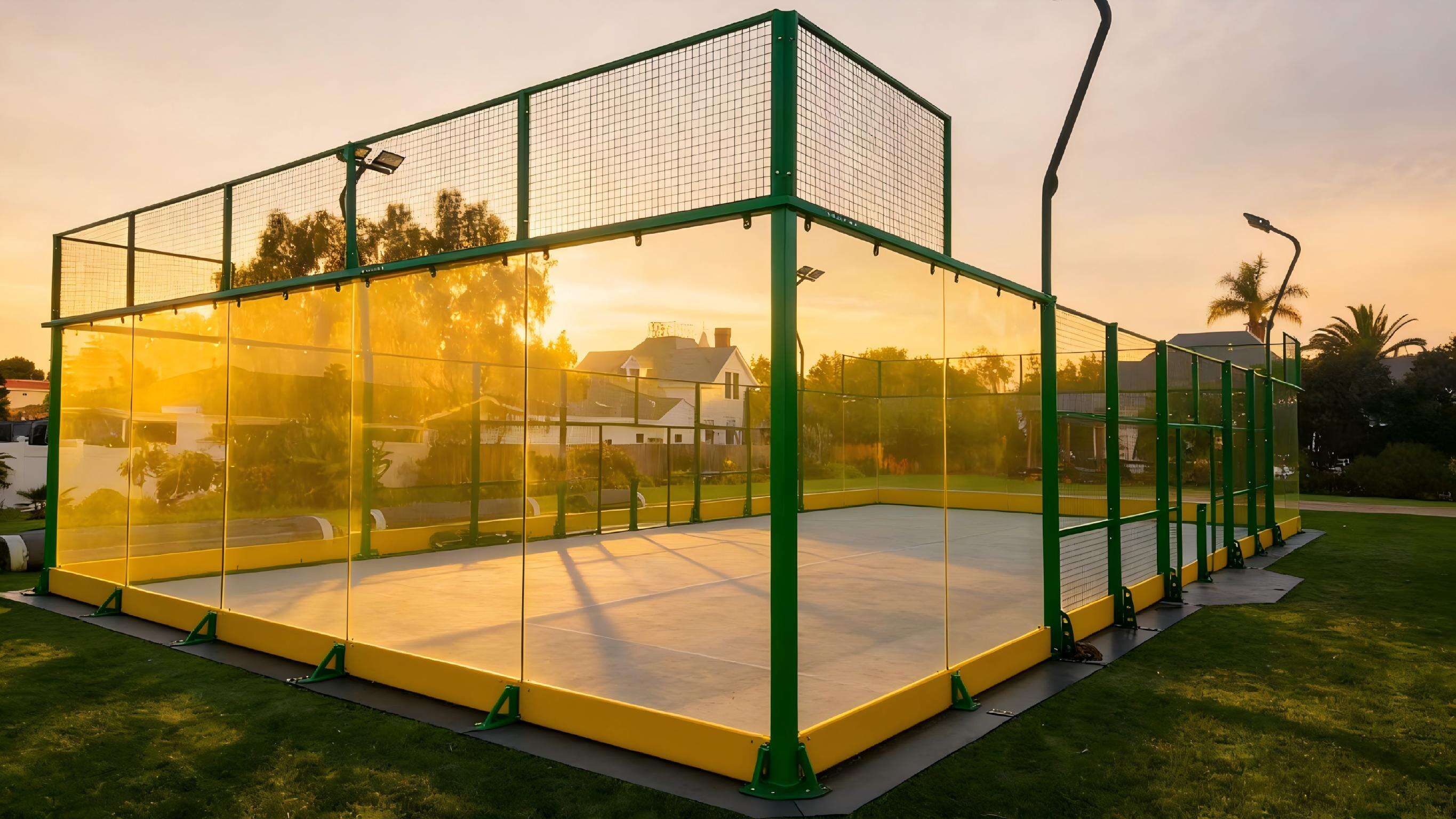
Competitive Advantages of Canchas de Padel Over Traditional Sports Facilities
Canchas de padel outperform conventional sports facilities on three core dimensions: spatial efficiency, capital efficiency, and demographic inclusivity. A single tennis court (260 m²) fits three padel courts (3 × 200 m²), enabling up to 12 simultaneous players versus four in tennis—doubling usage density and revenue potential per square meter. Construction and maintenance costs are substantially lower: synthetic turf requires minimal irrigation or resurfacing; enclosed walls eliminate ball retrieval labor and reduce noise spillover; and modular systems shorten build times. Return on investment typically materializes in three to five years—faster than tennis or indoor soccer facilities. Crucially, padel’s universal appeal bridges generational and socioeconomic divides. Unlike basketball courts—dominated by younger, highly athletic users—or tennis courts requiring years of training, padel welcomes families, retirees, and newcomers alike. Its doubles-only format drives repeat bookings, league participation, and community loyalty—making it a uniquely scalable, socially resonant, and commercially resilient amenity for hotels, corporate campuses, and urban master-planned communities.
FAQs
What makes padel courts space-efficient in urban areas?
Padel courts can fit three courts within the area of one tennis court, optimizing available urban land and enabling rooftop or stacked installations.
How does padel's accessibility encourage participation?
With simplified rules, lightweight rackets, and lower costs, padel attracts both beginners and seasoned players across various age and income levels.
Why are padel courts integrated into mixed-use developments?
Canchas de padel boost foot traffic and economic activity in malls, residential complexes, and gyms, while fostering community ties through the sport's social doubles format.
What role do municipalities play in promoting padel?
Governments are reclassifying padel as essential infrastructure, streamlining zoning laws, and adopting regulations to accelerate court deployment.
How do Padelfunds and franchise models reduce investment risks?
These initiatives provide pooled capital, pre-designed facilities, and operational support, lowering upfront costs and easing market entry for small and medium-sized investors.