
 EN
EN


A Sports Facility Consultant's Discovery
A sports facility consultant working on a large project in the Middle East once shared a revealing story. He had two suppliers with similar quotes and comparable brochures. He decided to visit a court installed by each company. At the first site, he noticed uneven welding on the frame joints and glass panels with visible distortions when viewed at an angle. At the second site, the frame connections were clean and precise, the glass was flawless, and the turf was laid perfectly flat. The price difference was minimal, but the quality difference was stark. That experience shaped his approach to every subsequent project: the brochure is just the beginning. The real test is in the details of materials, manufacturing, and the supplier's commitment to quality.
The Materials That Define Performance
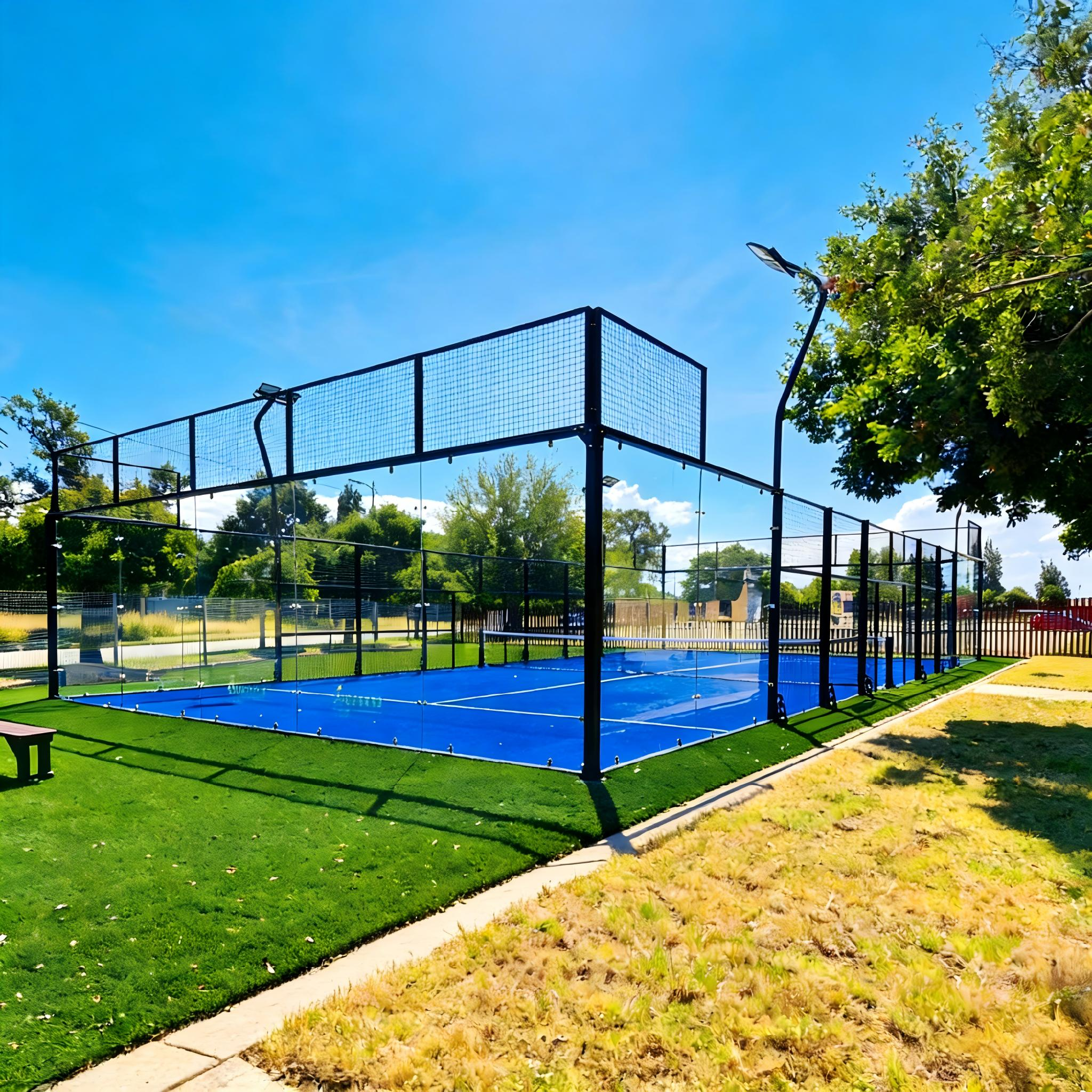
A padel court's performance and durability are determined by its materials. The structural steel must be hot-dip galvanized, not merely painted or electro-galvanized, to resist corrosion over years of exposure to weather and player impact [citation:client website]. The glass panels are equally critical. They must be fully tempered safety glass, typically 10mm to 12mm thick, with CE certification to ensure they can withstand the demands of competitive play . A simple visual check can reveal issues: hold a straight edge against the glass surface to check for warping, and inspect the edges for chips or cracks that could compromise strength.
The artificial turf is often overlooked but is a key differentiator. Premium turf systems use UV-stabilized polyethylene monofilaments with a high fiber density, typically between 8,000 and 12,000 stitches per square meter, to ensure durability and consistent ball response . The pile height should be 10mm to 12mm, with a textured surface that provides grip and reduces the risk of player injury. The backing—the layer that holds the turf together—should be double-layered and perforated for effective drainage. A manufacturer's willingness to provide detailed turf specifications and test reports is a sign of confidence in their product.
What Certifications Tell You
In an industry with growing regulatory oversight, certifications provide objective assurance of quality and safety. ISO 9001 certification indicates that a manufacturer follows documented quality management processes . CE marking is mandatory for construction products sold in Europe and confirms compliance with health, safety, and environmental standards . For projects in exposed locations, wind resistance certifications are essential. EFC-4 hurricane resistance rating, for example, demonstrates that a court can withstand instantaneous wind speeds of 55 meters per second, a critical feature for coastal or island installations [citation:client website].
The Manufacturing Process Behind the Product
The quality of a padel court is a direct result of the manufacturing process. Companies that invest in high-precision CNC machining and advanced laser-cutting technology achieve tighter tolerances and more consistent quality than those relying on manual fabrication . A manufacturer with in-house research and development capabilities is better equipped to customize designs and solve engineering challenges. This is particularly important for projects with unique site conditions or specific aesthetic requirements. When evaluating a supplier, ask about their production line, their quality control procedures, and whether they have the engineering expertise to handle custom designs.
The Logistics and Installation Reality
For international buyers, the supplier's logistics and installation capabilities are as important as the product itself. A padel court is a large, heavy structure that requires careful coordination of shipping, customs clearance, and site preparation . A supplier with proven export experience—ideally with references in the buyer's region—can navigate these complexities efficiently. The installation process is equally critical. A court that is poorly installed will perform poorly regardless of material quality. Some manufacturers offer turnkey solutions that include on-site installation and commissioning by trained technicians . This approach reduces the risk of installation errors and ensures that the court performs as designed from day one.
The Support That Matters After Installation
The relationship with a court manufacturer should not end when the installation is complete. A reliable supplier provides responsive after-sales support, including a clear process for ordering spare parts, technical assistance for maintenance issues, and a commitment to addressing problems that arise during the warranty period . A manufacturer that has built a reputation for service, as Whale Sports has through its global reach and track record as China's No. 1 exporter of sports court equipment for eight consecutive years, demonstrates a commitment to long-term client relationships [citation:client website]. For a facility manager, the availability of a reliable support network can mean the difference between a minor maintenance issue and a costly operational disruption.
The Value of a Trusted Manufacturing Partner
The selection of a padel court manufacturer is a decision that affects the facility's performance, reputation, and financial return for years to come. Whale Sports, with over a decade of specialized experience and a global footprint spanning more than 50 countries, has the engineering expertise, manufacturing capability, and logistical networks to deliver courts that meet the highest standards . Their investment in CNC machining, in-house R&D, and rigorous quality control ensures that each court is built to exact specifications . By offering integrated, turnkey solutions that cover everything from design to installation, Whale Sports provides the assurance that developers and club owners need. Choosing a partner with a proven global track record and a commitment to quality is an investment in the long-term success of any padel facility.