
 EN
EN



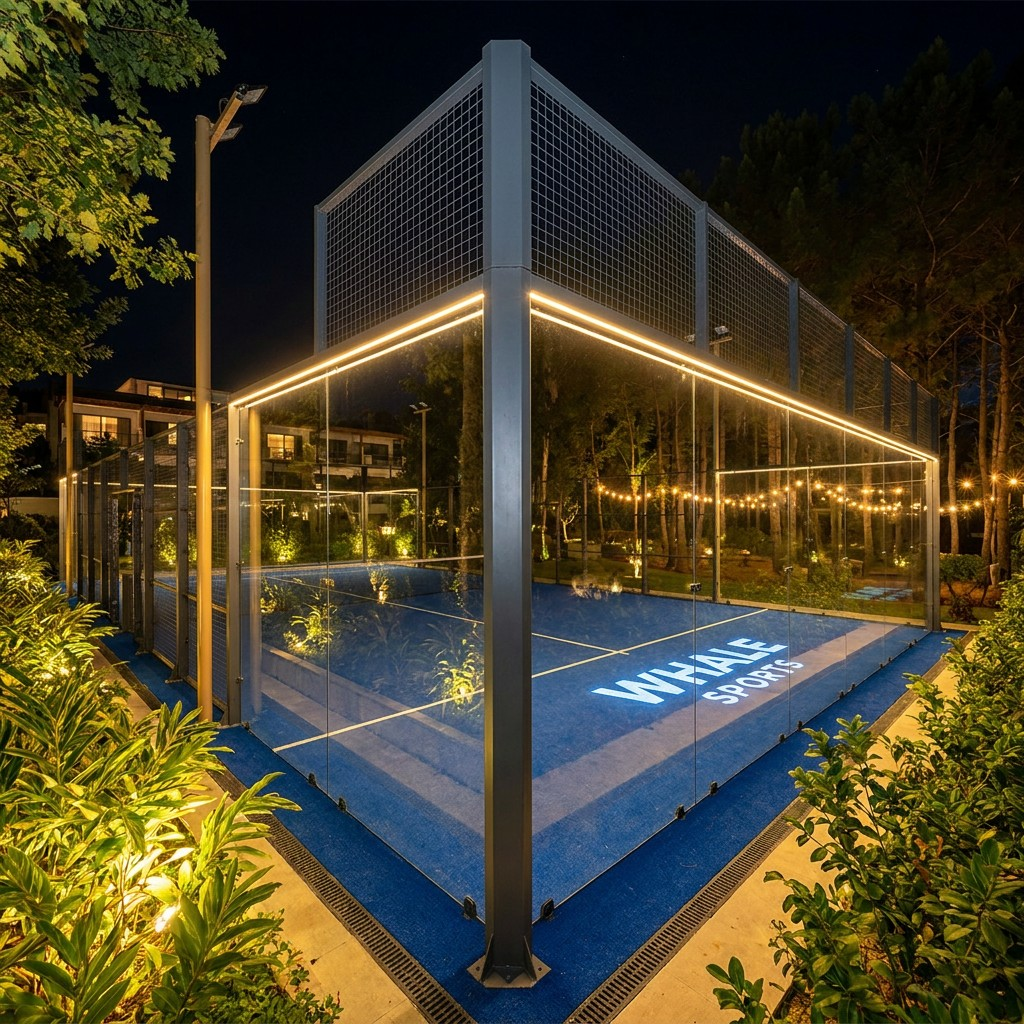
A Sports Facility Planner's Discovery
A few years ago, a sports facility planner was tasked with converting an underutilized tennis center into a more profitable venue. He began by analyzing usage data and player demographics. The existing tennis courts were busy on weekends but sat empty during weekday afternoons. He proposed replacing two of the four tennis courts with six padel courts. The results were telling. Player visits tripled, and the facility became a year-round destination. The padel courts were booked continuously, and the increased foot traffic boosted café and retail sales. That experience taught him that padel is not just a sport—it's a catalyst for transforming underperforming facilities into vibrant community hubs.
The Compact Advantage That Changes the Math
The business case for padel starts with its efficient footprint. A regulation tennis court occupies about 800 square meters, while a padel court measures 20 meters by 10 meters, requiring only about 200 square meters . This means a facility can install three or four padel courts in the same area as a single tennis court. The compact size allows for more courts in a limited space, serving more players simultaneously and maximizing revenue per square meter . The lower land requirement also makes padel facilities viable on smaller sites, such as rooftops, urban lots, or underutilized industrial spaces. For a developer, this efficiency changes the entire feasibility calculation.
Balancing Court Mix and Ancillary Spaces
The most successful modern padel facilities demonstrate that design is about more than just the court itself. A premium facility with multiple courts positions itself as a community hub by integrating lounge areas, wellness spaces, and a café . These facilities recognize that players value convenience and social connection as much as the game itself. A clubhouse with changing rooms, a reception area, a café, and a retail shop transforms the facility from a simple rental operation into a year-round community destination . Including a shaded outdoor terrace, flexible event space, and even a fitness area can further expand the facility's appeal. The goal is to create a space where players want to spend an entire day—not just an hour.
Selecting the Right Court Surface and Enclosure
The quality of materials directly affects player safety, playing experience, and long-term maintenance costs. The playing surface should comply with international standards, typically using a sand-dressed or sand-filled artificial turf with monofilament yarn that ensures consistent ball bounce and player safety . The enclosure system is another key strategic decision. All-weather tent courts provide the protection of an indoor facility at a fraction of the cost of a traditional building, enabling 365-day operation in climates with rain or extreme heat . In tropical environments, a tent covering can reduce court surface temperature by up to 10°C, making play more comfortable and attracting more players during peak hours. For facilities that prioritize a premium experience, full-glass panoramic enclosures offer an immersive playing environment with unobstructed views, ideal for tournament venues or high-end clubs .
Lighting, Accessibility, and User Experience
A well-designed facility prioritizes accessibility and player comfort. Step-free access, appropriate parking, and clear signage ensure the facility is inclusive for players of all abilities . Lighting is a critical performance factor. Modern LED lighting provides energy-efficient, even illumination essential for player safety and performance. LED projectors offer significant energy savings compared to traditional halide lamps, with longer life and greater eco-efficiency . Some facilities also incorporate sustainable features such as rainwater harvesting and solar panels to reduce operational costs and environmental impact. Acoustics should not be overlooked—proper sound-absorbing materials and design can reduce echo, creating a more pleasant playing environment and reducing complaints from neighboring buildings.
The Value of Integrated Planning and Expert Support
Designing a multifunctional sports facility is a complex project that requires careful coordination of court layout, material selection, and ancillary spaces. Working with a manufacturer that provides integrated planning and turnkey project management simplifies the process and reduces risk . Whale Sports, with its decade of specialized experience and global reach across more than 50 countries, offers the engineering expertise, production capability, and logistical networks needed to deliver facilities that meet the highest standards . Their advanced manufacturing technology, including precision CNC machining and laser-cutting systems, ensures exact tolerances and consistent quality across every component . By offering comprehensive solutions from design to installation, Whale Sports provides the assurance that developers and club owners need to create successful, lasting sports facilities .