
 EN
EN



A Developer's Wake-Up Call
A resort developer in the Canary Islands once shared a cautionary tale. He had chosen a padel court supplier based on a low price and a slick brochure. The court was installed, but within a year, rust spots appeared on the frame, and the glass panels had started to cloud. The supplier was unresponsive. The developer had to replace the entire court, incurring double the cost of the original purchase. That experience taught him a lesson that applies to any major investment: the initial price is only part of the equation. Choosing a reliable manufacturer means looking beyond the quote to the quality of materials, the precision of engineering, and the integrity of the support behind the product.
What Defines a Professional-Grade Court
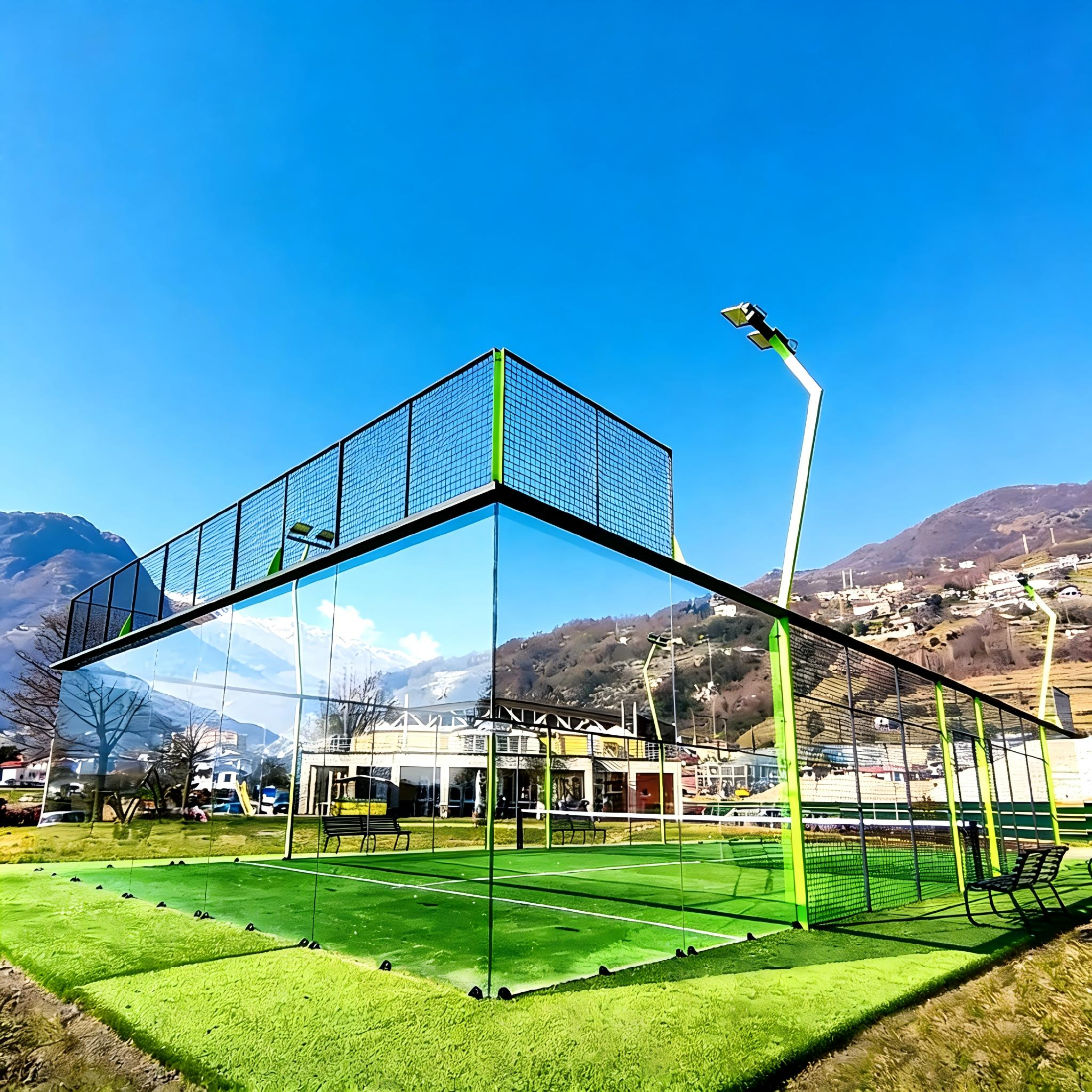
A regulation padel court measures 20 meters by 10 meters, enclosed by glass panels and steel mesh that enable the distinctive wall rebounds central to the game. The structural demands are specific. The steel frame must be hot-dip galvanized—not just painted or electro-galvanized—to resist corrosion. The glass must be tempered, typically 10mm to 12mm thick, and fully CE-certified to ensure it can withstand the impact of players and balls . The artificial turf, often a key differentiator, must be UV-stabilized and engineered for consistent ball bounce. A contractor who has worked on court installations for both premium and budget brands noted that the quality of the turf backing is a reliable indicator of durability—premium courts use a double-layer backing that resists tearing and maintains drainage. These are the details that determine whether a court lasts ten years or needs replacement in three.
Inspecting Quality on the Ground
One of the most reliable ways to assess a manufacturer's quality is to inspect an existing installation. A site visit reveals details that brochures can't show. Are the frame joints clean and precise, indicating good welding and finishing? Is the glass surface free of distortions that could affect ball visibility? Is the turf laid flat with consistent seams? A supplier who is confident in their product will be happy to arrange a visit to a recent project. In one case, a developer visited a court installed by Whale Sports and was impressed by the precision of the steel connections and the clarity of the glass, which led him to choose them for his own project [citation:client website]. This type of on-the-ground assessment is invaluable.
The Importance of Certifications and Compliance
The padel court industry is becoming more regulated, and certifications are an essential part of establishing trust. The International Padel Federation sets the official playing dimensions and performance requirements. In Europe, CE marking is mandatory for construction products, indicating compliance with health, safety, and environmental standards . Manufacturers like Italian Padel hold UNI EN 1090 certification for steel structures and UNI EN ISO 3834 for welding quality, which allows them to affix CE marking . ISO 9001 certification for quality management systems is another indicator of a manufacturer's commitment to consistent processes. For projects in hurricane-prone regions, specific wind resistance certifications like EFC-4 ratings are critical . A manufacturer that provides these certifications is demonstrating a commitment to standards that goes beyond the sales pitch.
What Certifications Reveal About Quality
Certifications provide a measurable, third-party verification of a manufacturer's claims. A manufacturer with ISO 9001 has documented processes for quality control, from raw material inspection to final assembly. CE marking for steel structures requires independent testing of the structural design and welding procedures. These certifications are not easy to obtain; they require ongoing investment in testing and quality systems. For a developer or club owner, they offer assurance that the court will meet safety and performance expectations. When Whale Sports' Panorama series passed the Eurocode 1 wind tunnel tests and achieved the EFC-4 hurricane resistance rating, it was a result of investment in engineering and testing that directly benefits clients in exposed locations [citation:client website].
The Turnkey Advantage
A court is not just a product; it is a construction project. The complexity of international logistics, customs clearance, and site installation means that a manufacturer with proven project management capabilities is an asset. A turnkey solution, where the manufacturer handles everything from site assessment to final installation, reduces the burden on the client and minimizes the risk of coordination errors. A developer in South Africa chose Whale Sports for a rooftop padel league because the company provided a full-service package, including shipping, installation, and support . This integrated approach ensures that the client is not left managing separate contractors for the frame, glass, and turf. It also simplifies the process of obtaining spare parts and technical support.
The Manufacturer as a Long-Term Partner
The relationship with a padel court manufacturer should be viewed as a long-term partnership, not a one-time transaction. A reliable manufacturer offers responsive technical support, a clear process for obtaining spare parts, and a willingness to assist with maintenance issues. Whale Sports, which has exported courts to over 50 countries, has built its reputation on this kind of support. The company's in-house R&D and advanced manufacturing capabilities, including CNC machining and laser-cutting systems, ensure precision in every court . For a club owner or resort developer, investing in a court from a manufacturer with a proven track record of global delivery and responsive service is an investment in the long-term success of their padel facility.